Healthy Shortbread Cookies — Vegan, Sugar-Free and Gluten-Free in One Simple Dough
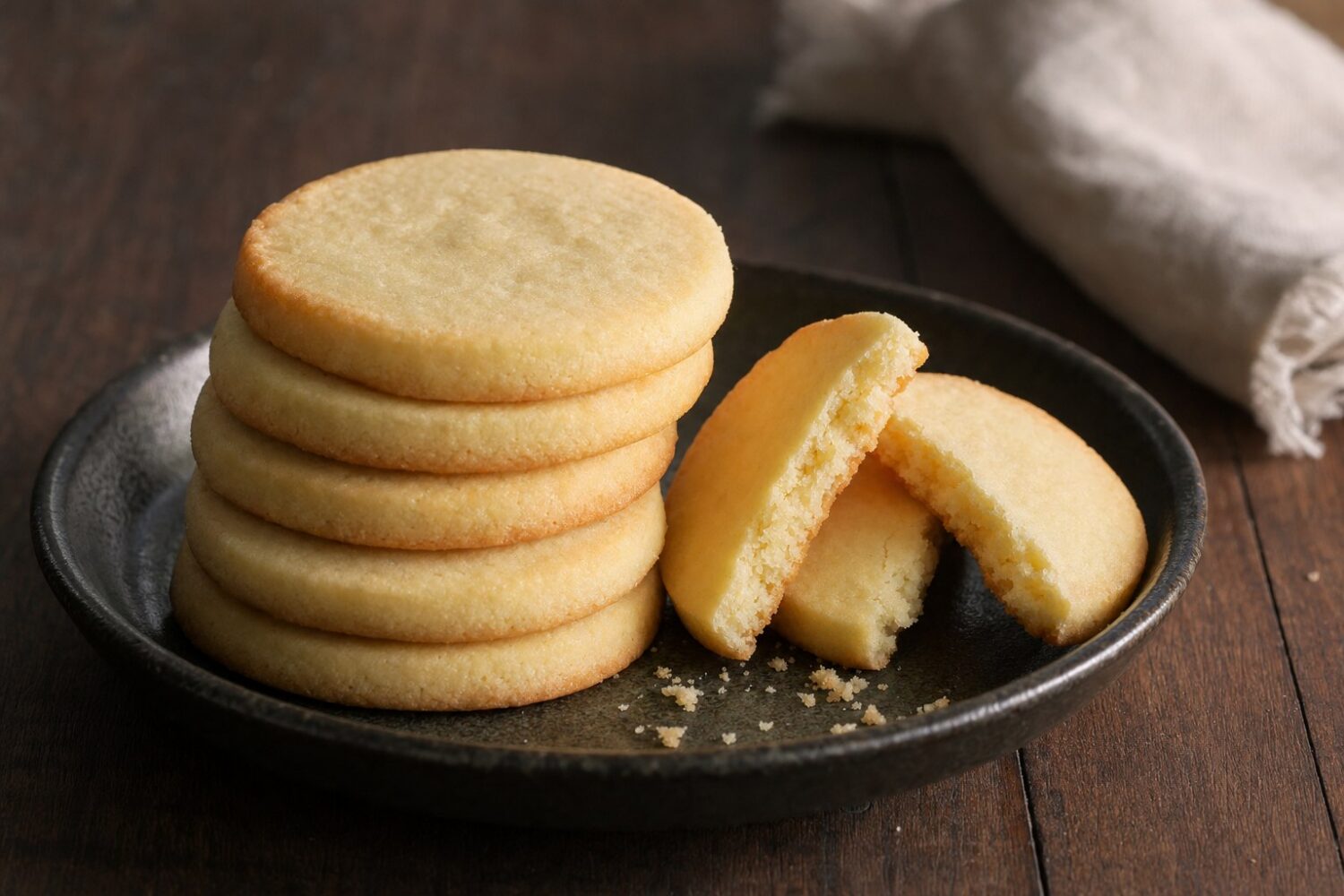
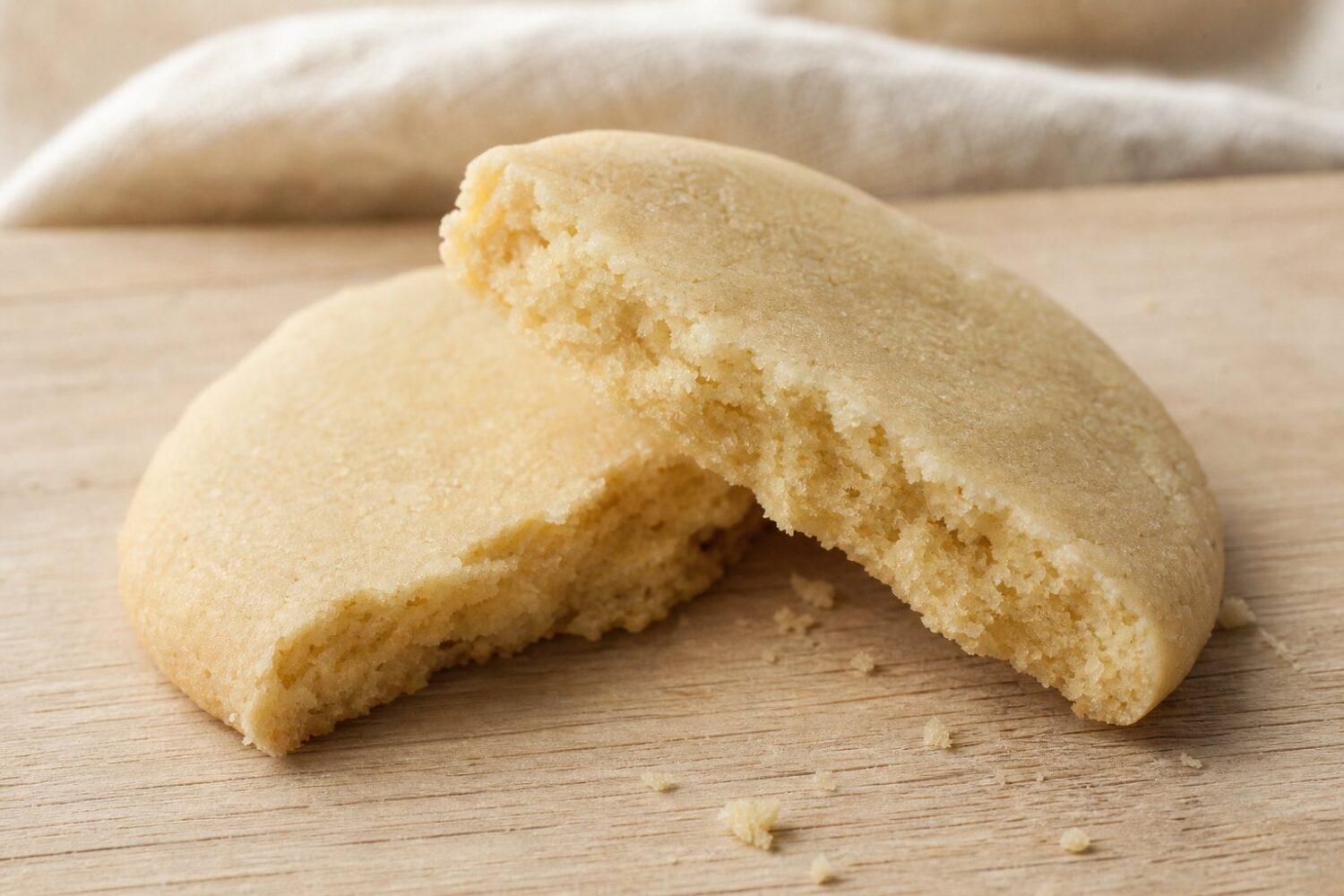
Shortbread splits along a clean fault line, not a jagged crack, when it’s made right. That’s actually one way to check a batch before it even finishes cooling: press a fingernail gently against the edge of a warm cookie, and it should give a straight break instead of crumbling apart into sand.
Getting a vegan shortbread to do that same clean snap, without dairy butter and without a cup of white sugar, took a fair number of test batches before landing on the ratio below.
The classic version of this cookie is built from a stubbornly simple 5:3:1 ratio, five parts fat, three parts flour, one part sugar, sometimes cut with a little rice flour or cornstarch to keep the crumb tender instead of dense.
It’s the formula bakers in Scotland have leaned on for centuries, long before “Petticoat Tails,” the scalloped, wheel-cut shortbread served at Hogmanay, ever showed up in a holiday tin. This version respects that ratio almost exactly. Only the fat and the sugar have changed.
What comes out of the oven is a batch of 20 healthy shortbread cookies, pale gold at the edges, snapping clean in half, tasting close enough to the original that it’s hard to place what’s missing until someone points out there’s no dairy and no white sugar in the dough at all.
Plenty of recipes marketed as a healthier take on shortbread lean entirely on almond flour and call it done.
The problem is that almond flour alone has almost no starch and very little structure of its own, so a cookie made from nothing but almond flour and a fat substitute tends to fall apart at the first bite, or worse, spread into a greasy puddle before it ever sets.
A gluten-free flour blend, with its rice flour and starches, or the oat-and-almond combination used here, gives the dough something to actually hold onto, which is the part that most quick internet versions skip.
What Makes This a Vegan Shortbread
Butter is shortbread’s entire personality. Pull it out and the result isn’t a lighter version of the same cookie, it’s a different cookie, so this swap isn’t a straight one-for-one substitution so much as a small re-engineering job.
A block-style vegan butter, the kind sold as a stick specifically for baking rather than a tub meant for spreading on toast, works because it holds a fat percentage close to dairy butter, usually somewhere around 80 percent, and it firms back up in the fridge the same way.
Brands like Miyoko’s or Earth Balance’s baking-stick line both behave this way; the softer tub spreads, by contrast, carry more water and tend to make a greasier, flatter cookie.
Coconut oil is the backup option when a baking-stick butter isn’t available, and it works, though the cookies pick up a faint coconut note and firm up noticeably harder once fully cooled, almost brittle at the edges.
Refined coconut oil is the better pick here over virgin, since virgin coconut oil carries enough of its own flavor to compete with the vanilla.
The reason this vegan shortbread still shatters instead of turning gummy or greasy comes down to keeping that fat cold and solid going into the oven.
Creaming softened vegan butter with the sweetener first, then shaping the dough into a log and chilling it before slicing, keeps the fat from melting out too fast in the oven and pooling under the cookie.
Skip the chilling step, even for twenty minutes, and the dough spreads more than it should, turning what should be a neat round into a thin, uneven puddle.
None of this changes the actual technique much from classic shortbread. Creaming time still matters (three minutes, not thirty seconds), the oven still needs to be genuinely preheated rather than just beeping ready, and the dough still needs a rest before it goes in. The fat is different. The method underneath it isn’t.
One label detail worth checking before buying a tub of vegan butter for this recipe: flip it over and look at the ingredient list. Some brands, especially the softer spreadable tubs meant for toast, list water as the first ingredient rather than an oil.
That extra water content is fine for spreading on a bagel, but it throws off the ratio here, adding moisture the dough was never designed to absorb and producing a softer, less structured cookie that spreads too much in the oven.
A block-style stick, the kind marketed specifically for baking rather than table use, almost always lists oil first and water somewhere further down the list, which is the quick way to check in the grocery aisle without reading the whole label.
Ingredients You’ll Need
None of the ingredients in this recipe are especially exotic, though a couple are worth explaining before measuring anything out.
The flour is doing double duty. A gluten-free flour blend, something built on rice flour, potato starch, and a small amount of xanthan gum, gives the closest texture match to the classic all-purpose version, mostly because commercial blends like Bob’s Red Mill’s 1-to-1 line are formulated specifically to swap in cup-for-cup.
The almond flour and oat flour combination is the other route, and it leans slightly nuttier and a touch more textured, closer to a Scottish oatcake than a bakery-case shortbread. Either path keeps this a genuinely gluten-free shortbread, not a recipe that avoids one ingredient while quietly leaning on another one nobody checked.
Cornstarch is the small addition that makes an outsized textural difference. A quarter cup, whisked into the dry ingredients before anything gets combined, is what produces that particular sandy, almost powdery crumb instead of a denser, more cake-like bite. Leave it out and the cookies still taste fine.
They just lose some of the specific snap that separates shortbread from a plain sugar cookie.
The sweetener gets its own section below, since it deserves more explaining than a single line in an ingredient list can give it.
Vanilla extract and a pinch of salt round things out, and neither is optional in the way people sometimes assume when a recipe looks simple. Salt in a sweet cookie isn’t there to make it taste salty.
It’s there to keep the sweetener from tasting flat and one-note, the way a soup tastes thin without it even when nothing about the recipe seems to call for salt specifically.
Pure vanilla extract, rather than an imitation version, matters more in a recipe like this one than it would in a heavily spiced cookie, since there’s very little else competing for flavor.
Imitation vanilla, made mostly from synthetic vanillin, tends to taste sharper and slightly bitter once baked, a flaw that’s easy to miss in a chocolate chip cookie loaded with other flavors and much harder to hide in a plain, pale cookie built around butter, flour, and not much else. A teaspoon is enough.
Doubling it doesn’t make the cookie taste twice as much like vanilla, it just makes the dough taste faintly boozy from the alcohol most extracts are suspended in.
The xanthan gum in a gluten-free flour blend deserves a quick mention too, since it’s doing a job wheat flour’s gluten would normally handle.
Gluten is what gives regular dough stretch and cohesion; take it out and something needs to bind the dry ingredients together so the dough doesn’t just crumble into loose sand before it ever reaches the oven.
Most commercial gluten-free blends already include a small measured amount of xanthan gum for exactly this reason, which is why buying a pre-mixed blend tends to work better here than assembling one from separate bags of rice flour and starch without it.
Why a Granulated Sweetener Works Better Here
Liquid sweeteners like maple syrup or agave are a poor fit for this particular cookie, and it’s worth explaining why before anyone tries to swap one in out of habit. Shortbread dough is dry and crumbly by design, held together mostly by fat rather than moisture.
Add a liquid sweetener and the dough turns sticky, spreads more than it should in the oven, and loses the crisp, defined edge that makes shortbread look like shortbread instead of a flat, glossy cookie.
A granulated monk fruit or erythritol blend, something like Lakanto’s Classic Monkfruit Sweetener, solves that because it behaves structurally like white sugar. It creams into the fat the same way, holds a bit of air the same way, and adds no extra liquid to a dough that depends on staying dry.
That’s the entire reason this works as a sugar free shortbread cookies recipe rather than just a lower-sugar one bolted onto the original formula. It’s also what makes it genuinely sugar-free rather than reduced-sugar in name only.
The sweetness lands close to real sugar, too, without the bitter aftertaste some stevia blends leave behind on the back of the tongue.
Erythritol-based versions can crystallize slightly if the dough sits at room temperature too long before baking, so it’s worth keeping the log chilled right up until it’s time to slice and bake, rather than leaving it out on the counter while the oven preheats.
Anyone testing this as a sugar free shortbread cookies recipe for the first time should start with the exact sweetener amount listed rather than cutting it back. Unlike real sugar, these sweeteners don’t caramelize or brown in the oven, so a batch that goes in under-sweetened comes out under-sweetened too.
There’s no late-stage baking chemistry that fixes a shy amount of sweetener after the fact, the way a longer bake might deepen a caramel note in a butter-and-sugar cookie.
Getting the Texture Right
A few small details separate a batch that snaps cleanly from one that turns out either too soft or oddly tough, and most of them have nothing to do with the ingredient list itself.
The baking sheet matters more than it seems like it should. A light-colored aluminum sheet bakes these cookies more evenly than a dark nonstick pan, which absorbs more heat and tends to brown the bottoms faster than the tops finish setting.
Parchment paper underneath helps regardless of which pan gets used, mostly because it keeps the lower-sugar dough from sticking the way a traditional high-sugar shortbread wouldn’t, since sugar itself has some natural nonstick properties that a sugar-free version doesn’t get for free.
Slice thickness affects bake time more than most people expect from a cookie this simple.
A round cut a bit thicker than a quarter inch needs closer to fourteen minutes rather than twelve, and it’s worth checking a first batch two minutes early just to see how a particular oven runs, since ovens vary more between models than their dial numbers suggest.
The edges are the tell: they should look just barely golden, not deeply browned, when the tray comes out, because these cookies firm up a good deal more as they cool on the tray rather than in the oven itself.
Overmixing the dough once the dry ingredients go in is the most common mistake with this particular recipe, more than with a regular flour version.
Gluten-free blends don’t develop the same elastic structure wheat flour does, so there’s no real risk of “overworking” it in the traditional sense, but mixing too long does warm the dough from the friction and starts to soften the fat before it ever reaches the fridge, undoing some of the chilling step’s work before it’s even happened.
Mixing just until no dry streaks remain, then stopping, keeps the fat cooler going into the chill.
Healthified Swap: Classic vs. Healthy Shortbread
Classic Shortbread (1 cookie)
- ~140 calories
- 7g sugar
- Dairy butter
- Wheat flour
This Healthy Shortbread (1 cookie)
- ~95 calories
- 1g sugar
- Vegan butter
- Gluten-free flour blend
-45 calories
vegan + gluten-free
Storing and Freezing These Cookies
These healthy shortbread cookies keep better than most people expect from a gluten-free bake.
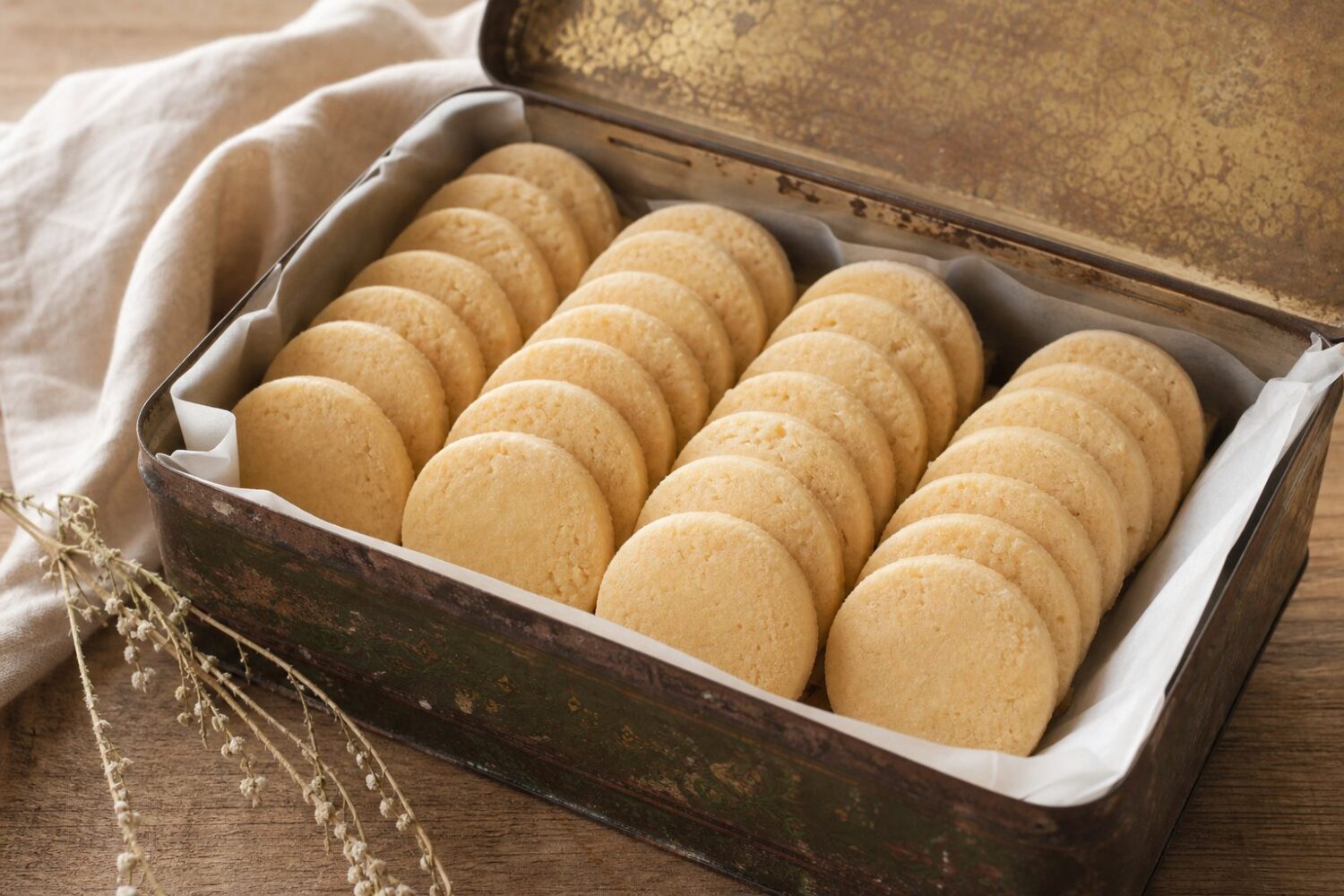
Stored in an airtight container at room temperature, away from direct sunlight or a warm counter near the oven, they hold their texture for about five days without turning soft or stale, and the flavor honestly improves slightly by day two, once the vanilla has had a chance to settle into the crumb.
Freezing works two different ways here, and which one makes sense depends on the goal. The baked cookies freeze well for up to three months in a sealed container, with a sheet of parchment between layers so they don’t stick together into one solid brick.
They thaw at room temperature in about twenty minutes, and a few seconds in a low oven brings back some of that just-baked snap if they’ve gone slightly soft in the freezer.
The unbaked dough log also freezes well, wrapped tightly first in plastic and then in foil, and it’s the more useful option for anyone who only wants to bake four or five cookies at a time rather than a full batch of 20.
Slicing straight from the frozen log, rather than thawing it first, actually works better: the log holds its round shape more precisely under a knife when it’s fully firm, and the only adjustment needed is an extra minute or two added to the bake time.
For gifting, these hold up surprisingly well packed in a tin with a layer of parchment between rows, better than a soft cookie would, since there’s no frosting or filling to smear against the lid.
A small batch tucked into a tin alongside a jar of tea makes a fairly easy last-minute gift, and nobody at the table needs to know the sugar and dairy were left out unless someone asks.
Humidity is the one variable that shortens all of the above.
In a kitchen that runs damp, especially in the weeks around the holidays when a stove is running for hours at a time and the air fills with steam, a cookie stored in anything less than a fully airtight container softens noticeably faster, sometimes within two days instead of five.
A silica packet tucked into the tin, the kind that comes in shoeboxes and vitamin bottles, sounds like overkill until it isn’t, and it does genuinely extend how long the snap holds.
What Makes These Healthy Shortbread Cookies Vegan, Sugar-Free and Gluten-Free
These healthy shortbread cookies swap three things at once: dairy butter for a vegan block butter, refined sugar for a granulated sugar-free sweetener, and wheat flour for a gluten-free blend.
Any one of those changes alone is easy; making healthy shortbread cookies that still snap cleanly with all three changed together took a few failed batches to get the ratio right.
Frequently Asked Questions
Is this a genuinely gluten-free shortbread cookie?
Yes, as long as the flour blend used is labeled gluten-free and, for anyone with celiac disease rather than a general sensitivity, certified gluten-free rather than just naturally gluten-free by ingredient list. Cross-contact during milling is common enough with oats specifically that a “certified gluten-free” oat flour is worth seeking out for that version of the recipe.
What makes this a good vegan shortbread recipe compared to using regular butter?
The block-style vegan butters sold for baking hold a fat percentage close enough to dairy butter that the creaming, chilling, and baking steps barely need adjusting. The main difference shows up in flavor, slightly less rich, slightly more neutral, which the vanilla extract mostly covers.
Can the dough for these healthy shortbread cookies be made ahead of time?
Yes. The shaped dough log keeps in the refrigerator for up to four days before slicing and baking, and it freezes for up to three months if wrapped tightly. Slicing straight from frozen, rather than thawing first, actually gives cleaner, more even rounds.
Why does a sugar free shortbread cookies recipe need a granulated sweetener instead of a liquid one?
Shortbread dough depends on staying dry and low-moisture to hold its shape in the oven. A liquid sweetener like maple syrup or agave adds moisture the dough isn’t built to handle, causing it to spread thin and lose its crisp edge. A granulated sweetener creams into the fat the same way sugar does without adding that extra liquid.
Do these cookies taste different from classic shortbread?
Close, but not identical. The texture snaps the same way thanks to the cornstarch and the fat-heavy ratio, and the sweetness lands in a similar range. What changes most is a slightly less rich, more neutral background flavor, since dairy butter carries a depth the vegan and sugar-free versions don’t fully replicate.
Why did my batch spread flat instead of holding its shape?
Almost always a chilling problem rather than an ingredient problem. If the dough log wasn’t fully firm before slicing, or the kitchen ran warm while the cookies sat on the counter waiting for the oven to preheat, the fat softens too early and the rounds spread thin.
A second short chill, fifteen minutes on the tray itself right before baking, usually fixes it on the next batch.
One easy variation, for anyone who wants it: dip half of each cooled cookie in a thin layer of melted dark chocolate, the 70 percent or higher kind keeps the whole thing reasonably sugar-free, and let it set on parchment for about twenty minutes before storing.
It’s not part of the base batch, just an addition that turns up around the holidays, usually with a few flaky sea salt crystals pressed into the chocolate before it hardens.
Recipe Card
Nutrition values are good-faith estimates and vary with the exact brands and quantities you use.
Ingredients
- 1 cup vegan butter, softened
- 2/3 cup granulated monk fruit or erythritol sweetener
- 2 cups gluten-free flour blend (or 1.5 cups almond flour + 0.5 cup oat flour)
- 1/4 cup cornstarch
- 1 tsp vanilla extract
- Pinch of salt
Instructions
- Cream the vegan butter and sweetener together until light and fluffy, about 3 minutes.
- Mix in the vanilla extract.
- In a separate bowl, whisk together the flour blend, cornstarch, and salt.
- Add the dry ingredients to the butter mixture and mix just until a soft dough forms — don't overwork it.
- Shape the dough into a log, wrap it, and chill for at least 30 minutes.
- Preheat the oven to 325°F (163°C). Slice the log into 20 rounds and place on a parchment-lined baking sheet.
- Bake for 12 minutes, until the edges are just barely golden. Cool on the tray for 5 minutes before moving to a wire rack.