
Coconut Cranberry Breakfast Cookies — a Protein Recipe Worth Waking Up For
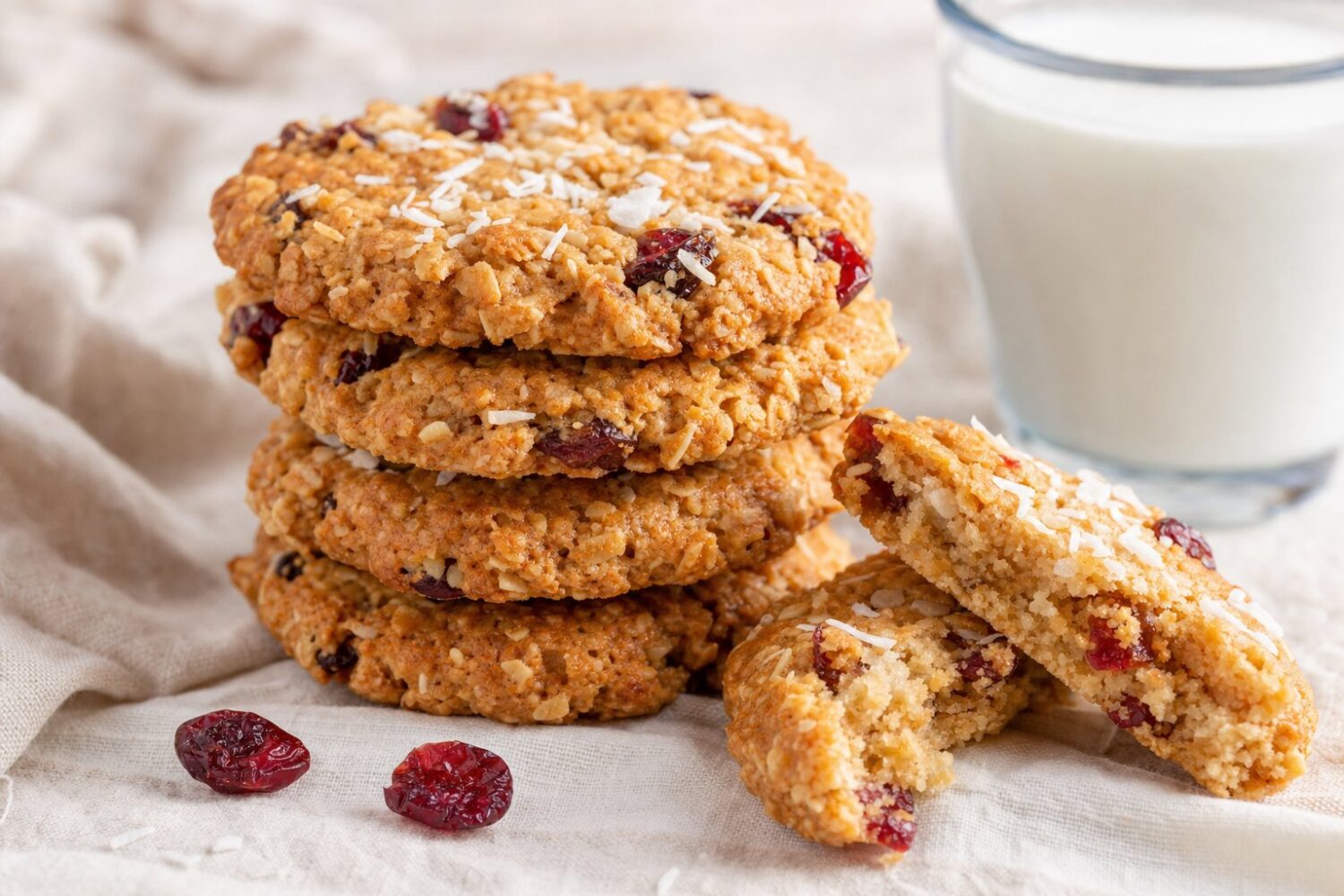
The oats go in the bowl before the coffee finishes brewing, which is really the whole point of a cookie built for breakfast.
These coconut cranberry cookies started as a way to use up half a bag of shredded coconut and a stray banana that was two days past “still good for slicing,” and the combination held up well enough to become a regular batch.
Mix the dough on a Sunday night, bake it Monday morning, and there’s a stack of them cooling on the counter before anyone has to decide what else to eat.
What makes this version different from a standard oatmeal cookie is the protein powder folded into the dry mix.
It’s not there to disguise the flavor or turn dessert into a supplement; it just nudges the macros so one cookie and a piece of fruit can function as an actual breakfast instead of a snack that leaves you hungry by 9:30.
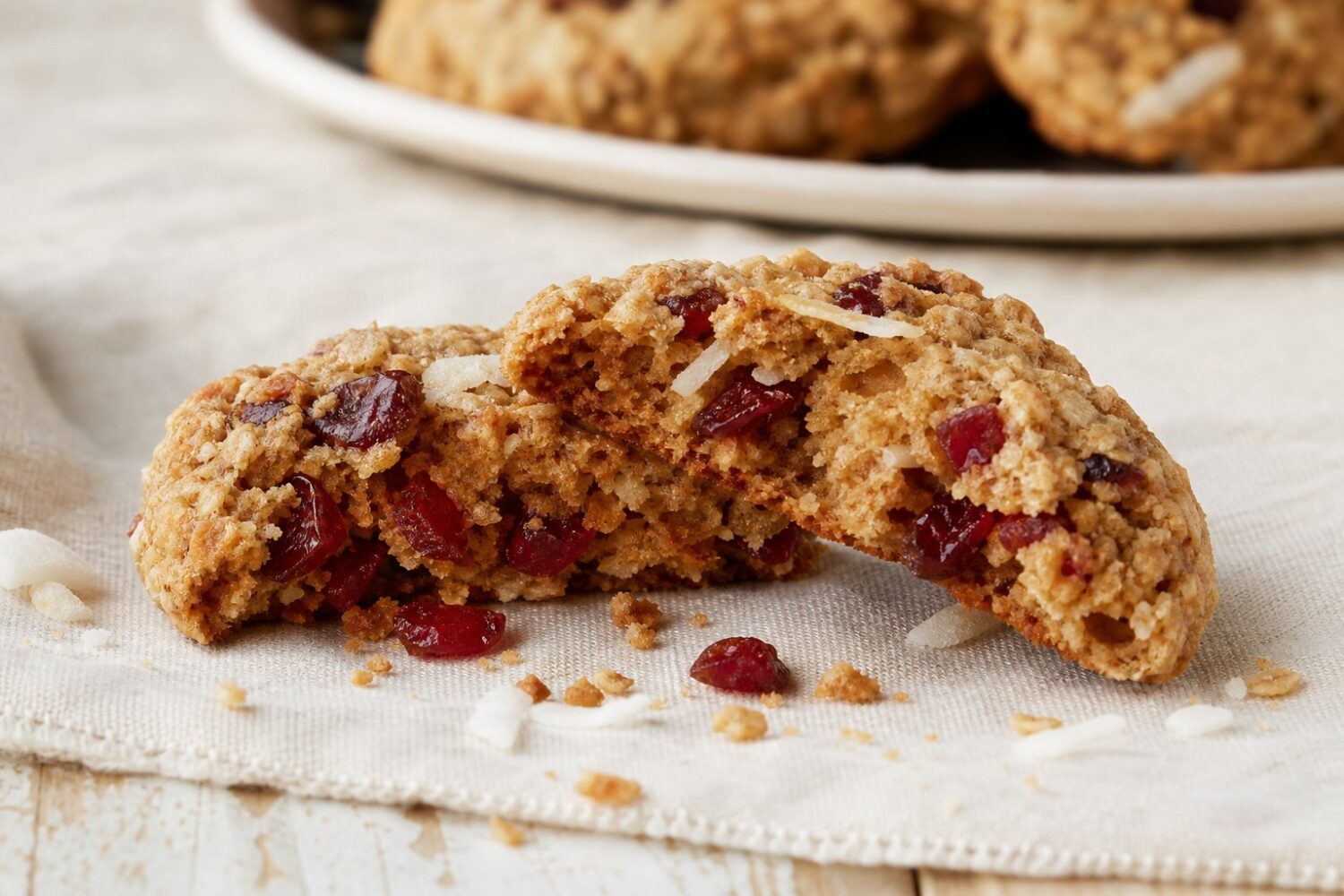
The dried cranberries add tartness against the sweetness of the banana and honey, and the coconut gives the whole thing a slightly chewy, toasted edge once it’s out of the oven.
These are dense enough to hold together in a bag, sturdy enough to eat one-handed on the way out the door, and they don’t fall apart the way a lot of “healthy cookie” recipes do when you cut the sugar and butter.
Prep takes about 15 minutes from bowl to baking sheet, and they’re in the oven for 14 minutes at 350°F, so the whole process fits inside the gap between getting dressed and leaving the house. Here’s how to make them, along with a few notes on why the ratios work the way they do.
Ingredients You’ll Need
This recipe uses two cups of old-fashioned rolled oats, which give the cookies their base structure and a bit of chew. Quick oats work in a pinch but produce a softer, less textured result.
One scoop, roughly 30 grams, of vanilla protein powder goes in with the dry ingredients; whey or a plant-based blend both work, though whey tends to bake up slightly denser.
Half a cup of shredded coconut adds texture and a faint toasted note once it hits the oven heat, and half a cup of dried cranberries brings the tart contrast that keeps the cookies from tasting one-note sweet.
For the wet ingredients, one ripe banana mashed until mostly smooth acts as the binder and natural sweetener: the riper the spots on the peel, the sweeter the final cookie. A third of a cup of almond butter adds richness and healthy fat, holding the dough together without needing an egg.
Two tablespoons of honey rounds out the sweetness, and a half teaspoon of cinnamon plus a pinch of salt sharpen the flavor so nothing tastes flat.
Once everything is mixed, scoop the dough into 12 mounds on a parchment-lined baking sheet and flatten each one slightly with the back of a spoon. These cookies don’t spread much on their own, so the shape you give them going into the oven is close to the shape you’ll get coming out.
Bake at 350°F for 14 minutes, until the edges turn a light golden brown. Let them rest on the tray for five minutes before moving them to a wire rack; they’re fragile straight out of the oven but firm up quickly as they cool.
Why This Holds Up Better Than a Granola Bar
Most granola bars lean on sugar and inflated marketing to look like a reasonable breakfast, then leave you scanning the pantry an hour later.
The math here is different: with roughly six grams of protein and only seven grams of sugar per cookie, one of these plus a piece of fruit or a glass of milk gets closer to actual staying power than the average bar wrapped in foil.
The oats provide slow-digesting carbohydrate, the almond butter contributes fat, and the protein powder rounds out the profile so the cookie isn’t just a sugar spike wearing a healthy label.
There’s also the texture question. A granola bar is often either rock-hard or so sticky it falls apart in the wrapper.
These cookies bake to a consistency that’s soft in the middle with a slightly crisp edge, closer to an actual cookie than a compressed oat brick, which matters if breakfast is something you’re supposed to enjoy rather than just tolerate.
Portion control is also easier to judge with a cookie than with a bar pulled from a box. Each one comes in at about 150 calories, so two cookies land in roughly the same range as a bowl of cereal with milk, but with more protein and less refined sugar working in your favor.
Pair one with a piece of fruit, a hard-boiled egg, or a cup of yogurt, and the combined protein count climbs well past what most packaged breakfast bars offer on their own.
Why Coconut and Cranberry Work Together
Coconut on its own can taste flat, even a little waxy, if there’s nothing to cut through the richness. Cranberries solve that. Their tartness pushes back against the sweetness of the shredded coconut and the honey, so the finished cookie doesn’t read as one-dimensional.
It’s the same logic behind coconut-lime or coconut-pineapple pairings — something acidic keeps the coconut from dominating the bite.
Dried cranberries also hold their shape through the bake, so you get pockets of chew scattered through the cookie instead of everything melting into a uniform paste. If cranberries aren’t available, dried cherries or chopped dried apricots make a reasonable substitute, though the tartness level will shift slightly with either swap.
There’s a textural pairing at work too. Shredded coconut toasts slightly at the edges in the oven, picking up a faint nuttiness it doesn’t have raw, while the cranberries stay soft and a little chewy since they’re folded in rather than baked separately.
Biting into one gives you both textures at once, which is part of why this combination shows up so often in granola, trail mix, and now, breakfast cookies.
Make-Ahead and Storage
These cookies are built for batch cooking. Once fully cooled, store them in an airtight container at room temperature for up to five days — they won’t dry out the way some low-fat baked goods do, thanks to the almond butter and banana keeping moisture in the crumb.
For longer storage, freeze them in a single layer on a tray until solid, then transfer to a freezer bag or container for up to two months.
A frozen cookie needs about 20 minutes on the counter to soften, or 15 seconds in the microwave if you’re in more of a hurry. Doubling the batch on a weekend and freezing half is the easiest way to keep breakfast solved for the following two weeks without repeating the same grocery run.
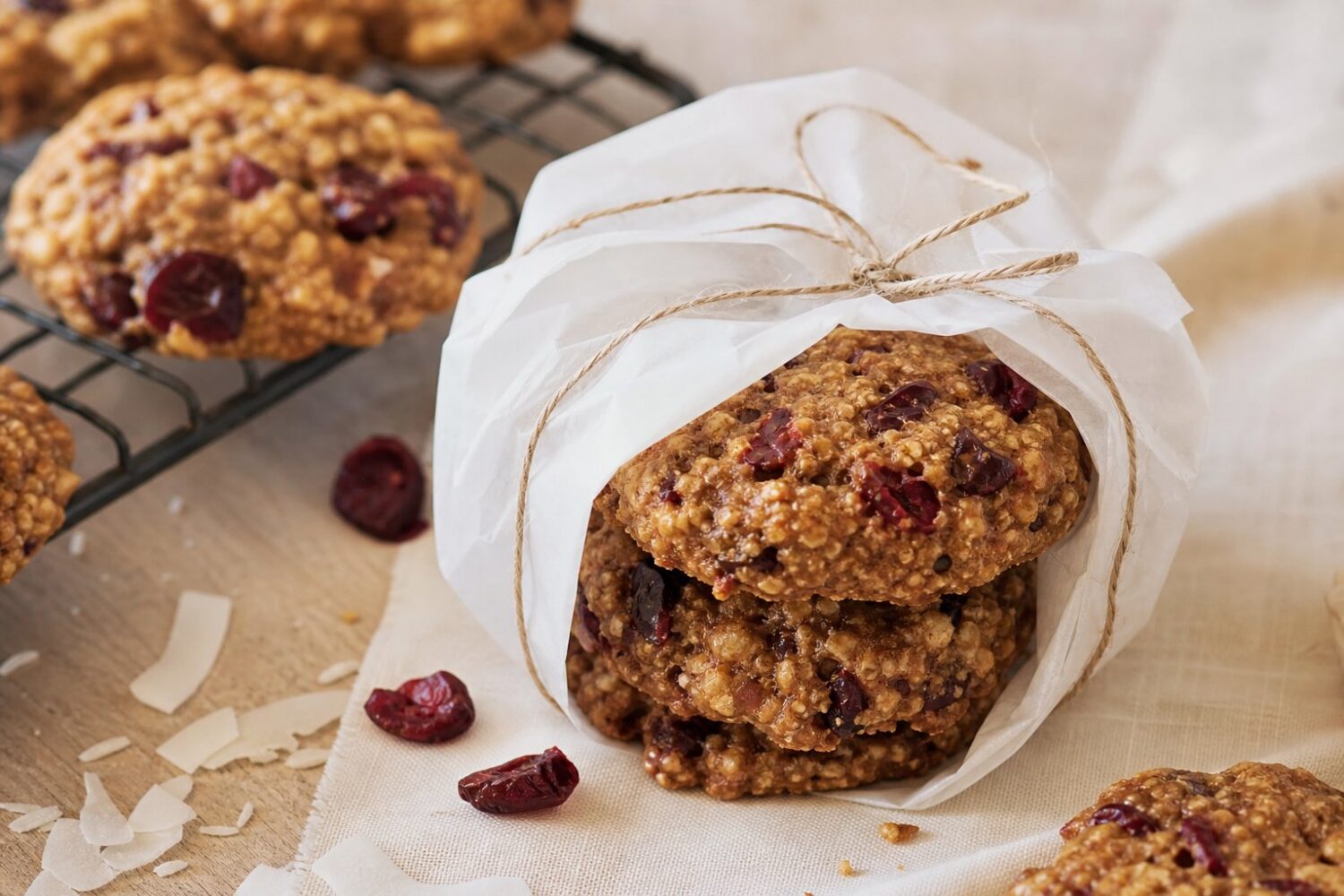
If you’re packing these for a lunch bag or a gym bag rather than eating them at home, wrap each one individually in parchment or wax paper before freezing. That keeps them from sticking together in a clump and makes it simple to grab exactly one on the way out, no digging through a frozen block required.
Frequently Asked Questions
Can I use a different protein powder?
Yes. Whey, casein, and plant-based blends (pea, rice, or a mixed vegan protein) all work in this recipe. Whey tends to produce a slightly denser, more compact cookie, while plant-based powders can leave the dough a touch drier — if that happens, add an extra tablespoon of mashed banana or almond butter to bring the moisture back.
Do these cookies need an egg?
No. The mashed banana and almond butter act as the binder, so no egg is needed. That also makes this recipe naturally suited to vegan diets, provided the protein powder and honey are swapped for plant-based and vegan-friendly alternatives (maple syrup works well in place of honey).
Why did my cookies turn out dry or crumbly?
This usually comes down to protein powder absorbing more liquid than expected, or an under-ripe banana that didn’t mash down enough sweetness and moisture. If the dough feels stiff before baking, mix in an extra tablespoon of almond butter or a splash of milk until it holds together when pressed between your fingers.
Can I swap the coconut or cranberries for something else?
Both are flexible. Chopped walnuts or pecans can stand in for the coconut if texture matters more than flavor to you, and dried cherries, chopped apricots, or raisins all work in place of the cranberries. Keep the total volume roughly the same to preserve the dough’s consistency.
How many cookies does this recipe make, and how big should they be?
This batch makes 12 cookies at roughly 2.5 inches across when flattened before baking. Making them smaller will reduce the bake time slightly, so start checking for golden edges a minute or two early if you scoop smaller portions.
The last cookie from a batch usually ends up wrapped in a paper towel in someone’s coat pocket by Thursday, slightly crushed at the edges but still holding its shape — which, for something meant to survive a commute, is really the only test that matters.