
Frozen Peanut Butter Protein Fudge Pops — No-Churn, 12g Protein Each
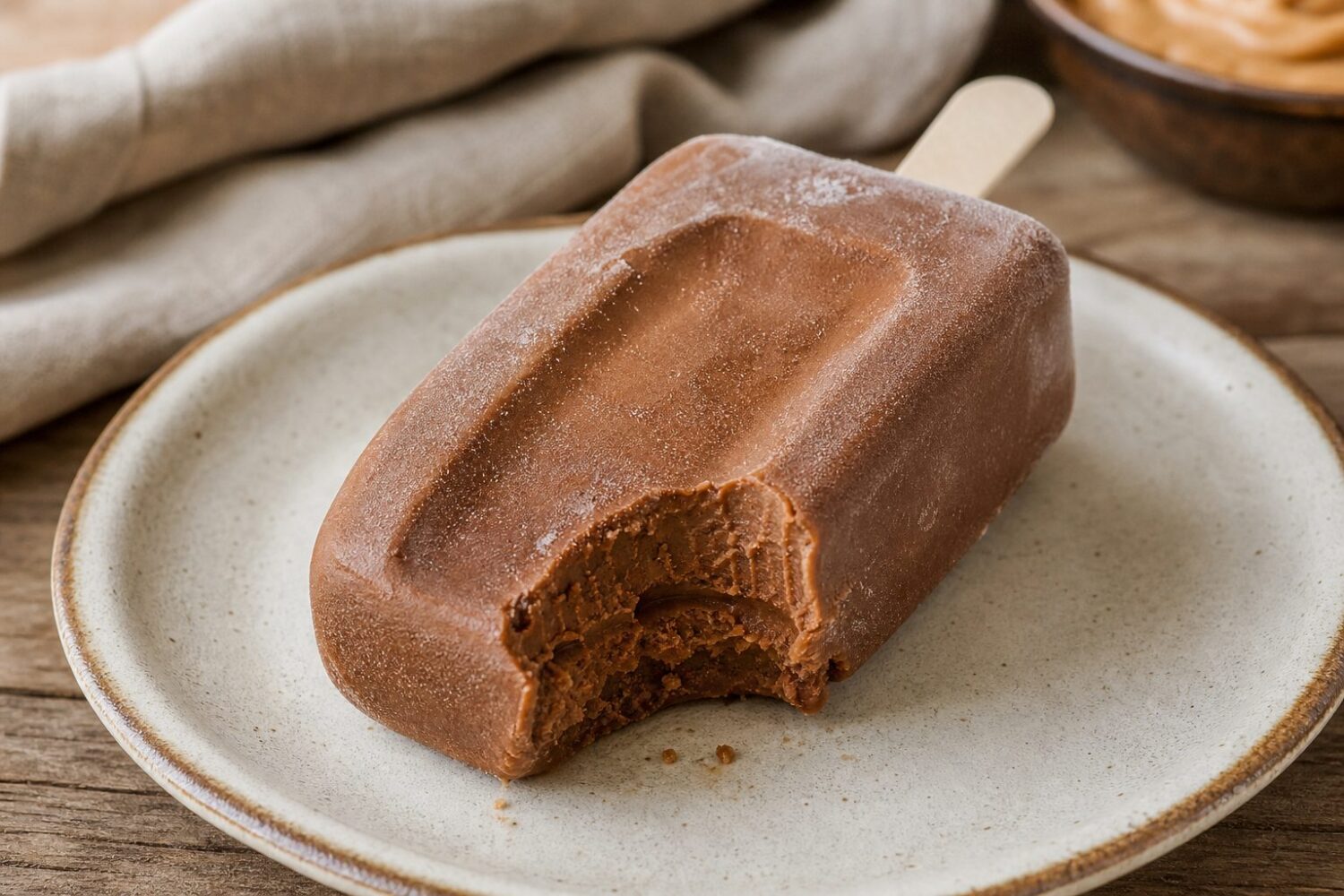
The problem with most protein ice pops is that protein powder and freezing are natural enemies. Whey in a watery base freezes into something with the texture of a shaved-ice cone that has been left in a hot car: gritty, separated, and unpleasant in a specific way that is hard to unlearn.
These frozen peanut butter protein fudge pops avoid that entirely by having almost no free water in them. The base is Greek yogurt, peanut butter and cocoa, thickened rather than diluted, which freezes into something closer to fudge than to ice. Each pop carries 12 grams of protein and 7 grams of sugar, none of it added beyond a single tablespoon of maple syrup across the batch.
Six minutes of work, then the freezer does the rest for four hours.
Why Fat Is the Whole Trick
Ice crystals are the enemy of texture in any frozen dessert, and the size they grow to depends on how much free water is available to them. Commercial ice cream controls this with churning and stabilisers. A home ice pop has neither, so the only remaining lever is having less water present in the first place.
Peanut butter provides the fat that gets in the way of crystal formation, which is why these stay sliceable-soft straight out of the freezer instead of setting into a solid brick. Two-thirds of a cup across six pops is not a garnish quantity, it is structural.
Full-fat Greek yogurt does the same job from the other direction. The 5 percent kind produces a noticeably creamier pop than 2 percent, and 0 percent produces exactly the icy texture this recipe exists to avoid. This is the one place where the low-fat version is the wrong choice.
Cocoa powder contributes a small amount of starch along with the flavour, and starch binds free water too. Dutch-process gives a darker, rounder result; natural cocoa is sharper and slightly more acidic. Either works, and the difference is more visible than tasteable.
Handling the Protein Powder
Chocolate or unflavoured whey both work, one scoop for six pops. Casein works better still, setting firmer and creamier, and is worth using if it is already in the cupboard. Plant blends are the awkward case: pea and rice protein drink noticeably more liquid and can turn the base pasty, so plant powder needs an extra two tablespoons of milk.
The powder goes in with the yogurt and gets whisked until no dry streaks remain, before the peanut butter joins. Adding powder last, into an already thick base, is how lumps happen, and a lump of dry protein powder in a frozen pop is a genuinely unpleasant thing to bite into.
Sift the cocoa and the powder together if either has been open a while. Both cake in humidity and neither breaks up properly once wet.
Sweetening Without Adding Much
One ripe banana, mashed, plus a tablespoon of maple syrup covers it. The banana matters for the same reason it matters in a loaf, its broken-down starches sweeten while its pectin thickens, and it contributes body that keeps the base from thinning as it warms during pouring.
Freezing suppresses perceived sweetness, which is a real effect and worth compensating for consciously. A base that tastes correctly sweet at room temperature will taste flat frozen. Taste the mix and aim for slightly sweeter than seems right; the freezer takes the edge off.
A pinch of salt does more here than it does in almost any other recipe on this site. Peanut butter and cocoa both flatten out when frozen, and a quarter teaspoon of salt brings both back into focus.
Filling the Moulds Without Air Pockets
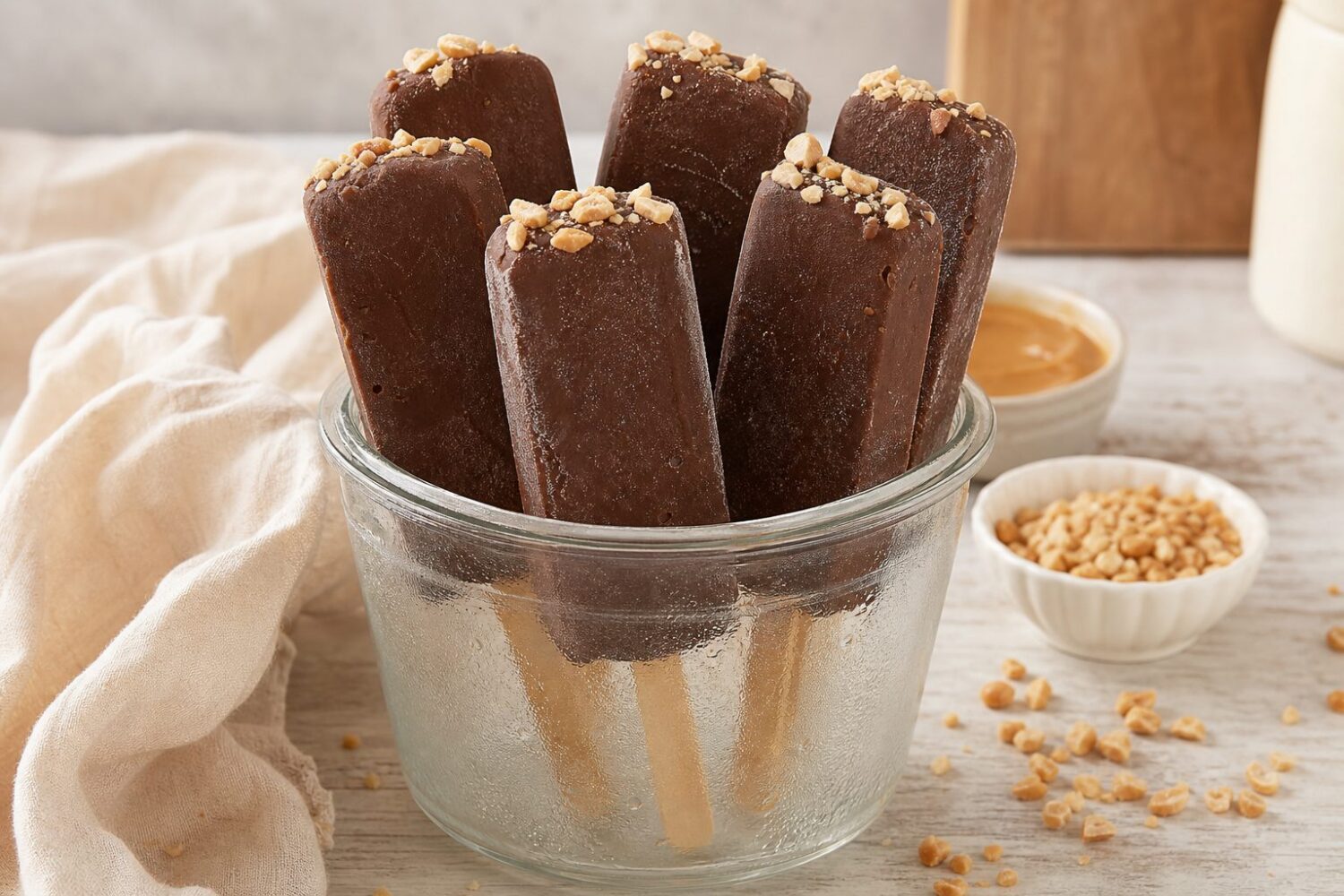
The base is thick, roughly the consistency of a soft frosting, which means it does not settle on its own the way a juice pop does. Spoon it in rather than pouring, in two or three stages, tapping the mould firmly on the counter between each addition.
Air pockets are the difference between a pop that comes out whole and one that snaps in half at the first bite. Tapping is not optional.
Leave about a quarter inch of headroom. This base expands less than a water-based pop but it does expand, and an overfilled mould pushes the sticks out of alignment as it sets.
If the moulds have no stick slots, freeze for ninety minutes first, then insert the sticks into a base that is firm enough to hold them upright. Sticks pushed into a soft base drift sideways and end up embedded at an angle.
Four Hours, and Getting Them Out
Four hours is the minimum for a fully set pop, and overnight is better. Because of the fat content these never freeze rock-solid, so the usual test of tapping the surface is misleading; go by time rather than feel.
To release, run warm water over the outside of the mould for ten to fifteen seconds and pull straight up with steady pressure. Twisting is what tears them. If a pop resists, another five seconds of water is the answer rather than more force.
Once out, they keep three months in a zip-top bag with the pops separated by parchment. Wrapped this way they do not develop the freezer-burn crust that ruins pops left uncovered in the mould, which happens within about a week.
They soften faster than a conventional ice pop, again because of the fat. Two minutes out of the freezer is about the window before the surface starts to give, which is worth knowing before handing one to a small child in a garden in August. More no-bake protein desserts in the same collection hold up better in heat if that is the constraint.
Variations Worth Making
Swapping the peanut butter for almond butter gives a milder, more dessert-like pop. Tahini is the interesting one: bitter, savoury, and unexpectedly good against the cocoa, though it divides opinion sharply.
For a swirled version, hold back a third of the base before adding the cocoa, then alternate spoonfuls of the pale and dark mixtures into the mould. Drag a skewer once through the middle. Twice makes mud.
Chopped dark chocolate or crushed peanuts folded in at the end add texture that survives freezing, unlike anything crisp, which goes soft within a day.
A layer of melted dark chocolate brushed inside the mould before filling sets into a thin shell that cracks properly when bitten. It also adds about 25 calories per pop and roughly ten minutes of patience.
Frequently Asked Questions
Why are my protein pops icy instead of creamy?
Too much free water in the base, which almost always traces to using low-fat or fat-free Greek yogurt, or to thinning the mixture with extra milk to make it easier to pour. Fat physically obstructs ice crystal growth, so 5 percent yogurt and a genuine two-thirds cup of peanut butter are what keep the texture fudgy. If the base seems too thick to spoon into the moulds, that is the correct consistency rather than a problem to fix.
Can these be made without protein powder?
Yes, and they are still respectable. Greek yogurt and peanut butter carry around 7 grams of protein per pop between them, so leaving the powder out drops the count from 12 grams to roughly 7 rather than to nothing. Replace the scoop with two tablespoons of cocoa and one extra tablespoon of peanut butter to keep the body, otherwise the base thins and the texture suffers.
What if I do not own ice pop moulds?
Small paper cups work and have the advantage that you can peel them away instead of fighting a release. Fill them, cover each with foil, and push a stick through the centre of the foil, which holds it upright while the base sets. A loaf tin lined with parchment also works if you would rather cut the frozen slab into bars, which is arguably a better format for a lunchbox anyway.
Are these safe for a nut allergy?
Not as written, but sunflower seed butter substitutes at a one-to-one ratio and freezes with a nearly identical texture. Check the protein powder separately, since several blends are manufactured on shared lines with nut products and say so in small print on the back rather than on the front.
How long do they really keep?
Three months in a sealed bag with parchment between them. Left in the open mould, they pick up a dry, crystallised surface layer within about a week, which is freezer burn rather than spoilage. It is harmless and tastes stale, so the parchment-and-bag step is worth the two minutes.
The last pop in the bag always has the most peanuts settled at the tip, which is either a flaw in the pouring method or a reward for waiting.
Recipe Card
Nutrition values are good-faith estimates and vary with the exact brands and quantities you use.
Ingredients
- 2 cups full-fat (5%) Greek yogurt
- 2/3 cup natural peanut butter
- 1 scoop (about 30g) chocolate or unflavoured whey or casein protein powder
- 3 tbsp cocoa powder
- 1 ripe banana, mashed
- 1 tbsp maple syrup
- 1 tsp vanilla extract
- 1/4 tsp salt
Instructions
- Sift the cocoa powder and protein powder together if either has been open a while.
- Whisk the Greek yogurt with the mashed banana, maple syrup and vanilla until smooth.
- Whisk in the protein powder and cocoa until no dry streaks remain.
- Add the peanut butter and salt, and stir until the base is uniform and roughly the consistency of a soft frosting. Taste, and aim slightly sweeter than seems right, since freezing suppresses sweetness.
- Spoon into six moulds in two or three stages, tapping the mould firmly on the counter between additions to drive out air pockets. Leave 1/4 inch of headroom.
- If the moulds have no stick slots, freeze 90 minutes first, then insert the sticks into a base firm enough to hold them upright.
- Freeze at least 4 hours, preferably overnight.
- To release, run warm water over the outside of the mould for 10 to 15 seconds and pull straight up. Do not twist.
- Store in a zip-top bag with parchment between the pops for up to 3 months.