Sugar-Free Zucchini Bread — One Bowl, No Added Sugar, and Properly Moist
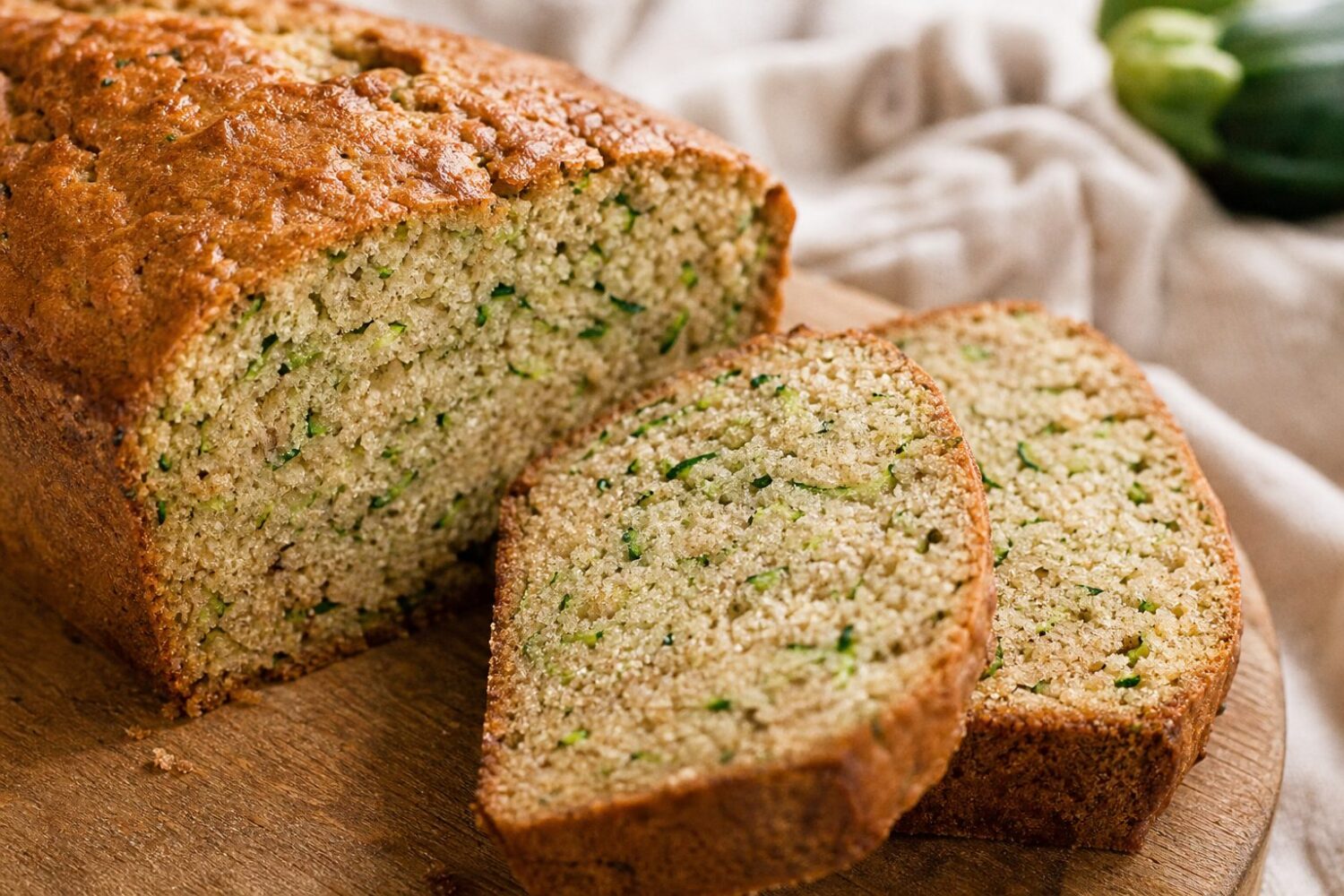
Zucchini bread has a reputation for being virtuous, which it earns almost entirely on the presence of a vegetable and loses immediately on the cup and a half of sugar most recipes call for. Take the sugar out carelessly and the loaf turns into something closer to a savoury quick bread with an identity problem.
This sugar-free zucchini bread solves it with two ingredients doing the sweetening: very ripe banana and a modest pour of date paste. Each slice lands around 150 calories with 6 grams of sugar, all of it from fruit, and the loaf stays properly moist for four days rather than the two most low-sugar bakes manage.
One bowl, one grater, one loaf tin. The only technical step is the one everybody skips.
Squeeze the Zucchini. Actually Squeeze It.
A medium zucchini is roughly 95 percent water, and two cups of it grated holds close to half a cup of liquid. In a conventional recipe, sugar absorbs a good share of that water and holds it in the crumb. Remove the sugar and the water has nowhere to go but into the flour, where it produces a loaf that is gummy in the middle and refuses to finish baking no matter how long it stays in.
Grate the zucchini on the coarse side of a box grater, pile it into a clean tea towel, gather the corners and wring it hard over the sink. Expect a third to half a cup of water to come out. The zucchini should look visibly compacted and slightly dry when you unwrap it.
Do not squeeze it to a pulp, though. The point is to remove free water, not to destroy the shreds. Those shreds are what keeps the crumb open and stops the loaf from becoming dense.
There is no need to peel it, and no reason to. The skin disappears into the crumb entirely and carries most of what makes this bread green-flecked rather than beige.
Where the Sweetness Comes From
Two ingredients, chosen because they behave differently in the oven.
Very ripe banana, the kind with more brown than yellow on the skin, brings sweetness plus the moisture the squeezed zucchini gave up. Its starches have already broken down to sugars, which is why an underripe banana simply does not work here and tastes faintly of raw starch.
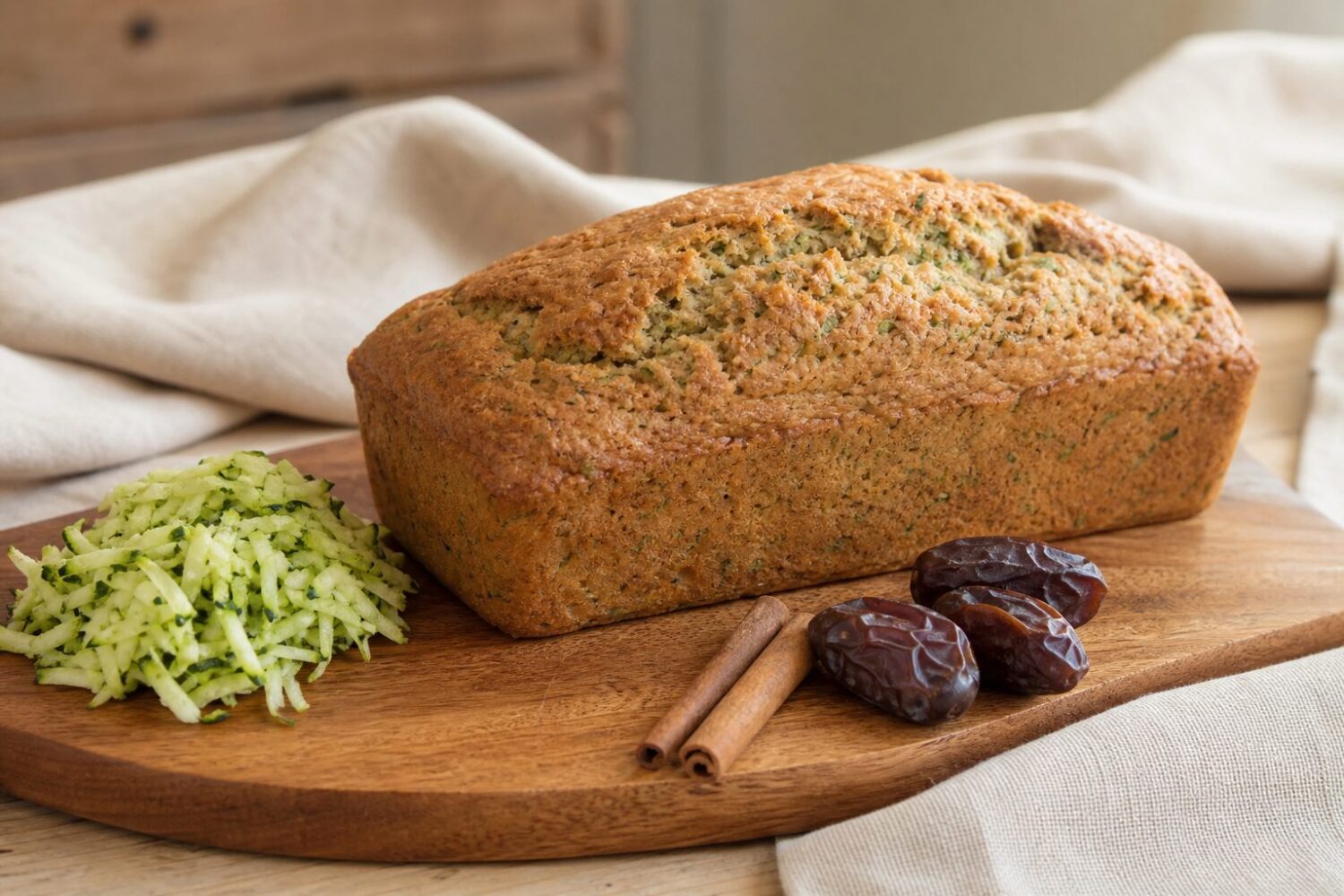
Date paste does the rest, and does it better than maple syrup for this specific loaf: dates carry fibre along with their sugar, so they sweeten without thinning the batter. Making the paste is trivial, six pitted Medjool dates soaked in hot water for ten minutes and blitzed with two tablespoons of the soaking water. It keeps a fortnight in the fridge and is worth making double.
Cinnamon and a scrape of nutmeg go in for the usual reason, but there is a second reason worth knowing: both spices read as sweetness to the palate. A loaf with a generous teaspoon of cinnamon tastes measurably sweeter than the same loaf without it, at zero cost to the sugar count. It is the cheapest trick in sugar-free baking and the one most consistently underused.
Flour, Fat and the Structure Problem
The base is oat flour and almond flour again, this time closer to 3:1, with a quarter cup of ground flaxseed. Flax matters more than it looks: sugar contributes bulk and tenderness in a conventional loaf, and the flax replaces some of both while adding enough binding to keep a flourless crumb from crumbling at the slice.
Two eggs carry the lift, helped by a teaspoon of baking soda reacting against the acidity of the banana and dates. Baking powder alone gives a flatter loaf here, because there is no acid for it to work with beyond what the fruit brings.
Melted coconut oil is the fat, a third of a cup. Less than that and the loaf dries out by day two; more and it sinks in the middle as it cools. This is the one measurement in the recipe worth being precise about.
The batter should drop reluctantly off a spoon rather than pour. If it pours, the zucchini was not squeezed enough, and the fix at that point is a tablespoon or two more oat flour rather than a longer bake.
Baking It Through Without Drying the Edges
Fifty to fifty-five minutes at 350°F in a standard 9×5 loaf tin, lined with parchment across the long dimension so the loaf lifts straight out. A skewer in the centre should come out with damp crumbs clinging to it, not wet batter and not perfectly clean. Perfectly clean means five minutes too long.
Because there is no sugar to help the crust brown, the top comes out paler than a conventional zucchini bread and that is not an indicator of doneness. Judge it by the skewer and by the sides pulling very slightly away from the parchment.
If the top is browning faster than the middle is setting, which happens in ovens with an aggressive top element, a loose sheet of foil over the tin at the forty-minute mark fixes it without affecting the rise.
Cool in the tin for ten minutes, then on a rack for at least another thirty before slicing. A warm flourless loaf tears rather than slices, and the crumb firms up considerably as it cools.
Keeping It, and What to Do With Day Four
Wrapped in a tea towel inside a tin, it holds four days at room temperature. Refrigerating it is a mistake, the crumb goes firm and tastes stale a full day earlier, which is the opposite of what refrigeration does for a sugared loaf.
Sliced and frozen in a single layer, it keeps three months and toasts straight from frozen. Toasting is arguably the better way to eat it anyway, since a little dry heat concentrates the banana sweetness.
By day four, if any remains, it makes an unreasonably good base for something closer to a bread pudding: cubed, soaked in beaten egg and milk, baked twenty minutes.
Swaps
Grated carrot substitutes for half the zucchini and needs no squeezing, since carrot holds far less free water. The loaf turns sweeter and denser, and the bake time drops by about five minutes.
Walnuts or pecans, three quarters of a cup, chopped and folded in last. Toast them first for seven minutes at the same oven temperature; untoasted nuts in a moist loaf go soft and taste of nothing.
For an egg-free version, two flax eggs work but the loaf will be shorter and noticeably denser. It still slices. Beyond that swap, the structure runs out of things holding it together.
Frequently Asked Questions
Can I use a sugar substitute instead of banana and dates?
A granulated monk fruit or erythritol blend will sweeten it, but it will not do the other two jobs the fruit is doing, which are adding moisture and adding bulk. A loaf sweetened only with a substitute comes out drier and shorter, and usually needs an extra egg and a few tablespoons of milk to compensate. If a substitute is necessary for blood-sugar reasons, keep the banana for moisture and replace only the date paste.
My loaf was gummy in the middle. What went wrong?
Almost certainly water from the zucchini. Grated courgette holds close to half a cup of liquid in the quantity this recipe uses, and without sugar in the batter to hold that water, it collects in the centre of the loaf and stops the crumb setting. Wring the grated zucchini in a tea towel until a third to a half cup of liquid comes out. A gummy centre is very rarely fixed by baking longer, which just dries the edges.
Does it taste like zucchini?
No, and it is worth understanding why. Zucchini is almost flavourless once baked, contributing texture and moisture rather than taste. What comes through is the banana, the cinnamon and the caramel note from the dates. The green flecks are the only real clue there is a vegetable in it, which is why this loaf works on people who claim to dislike zucchini.
Can this be baked as muffins?
Yes, and it is the better format for lunchboxes. The same batter fills twelve standard muffin cases and bakes in twenty-two to twenty-five minutes at the same temperature. Fill the cases three-quarters full rather than level, because a flourless batter rises less than a wheat one and a shy muffin looks apologetic.
The end slices, the ones with crust on two sides, are the ones that vanish first, which is unfortunate for anyone who prefers the middle.
Recipe Card
Nutrition values are good-faith estimates and vary with the exact brands and quantities you use.
Ingredients
- 2 cups coarsely grated zucchini, wrung dry in a tea towel
- 1 1/2 cups oat flour
- 1/2 cup almond flour
- 1/4 cup ground flaxseed
- 1 tsp baking soda
- 1 1/2 tsp ground cinnamon
- 1/4 tsp grated nutmeg
- 1/4 tsp salt
- 1 very ripe banana, mashed
- 1/3 cup date paste (6 Medjool dates blitzed with 2 tbsp soaking water)
- 1/3 cup coconut oil, melted
- 2 eggs
- 1 tsp vanilla extract
Instructions
- Heat the oven to 350F and line a 9x5 loaf tin with parchment across the long dimension.
- Grate the zucchini coarsely, pile it into a clean tea towel and wring it hard over the sink. Expect a third to a half cup of liquid to come out.
- Whisk the oat flour, almond flour, flaxseed, baking soda, cinnamon, nutmeg and salt in a large bowl.
- Stir in the mashed banana, date paste, melted coconut oil, eggs and vanilla until just combined.
- Fold in the squeezed zucchini. The batter should drop reluctantly off a spoon rather than pour; add a tablespoon or two more oat flour if it pours.
- Scrape into the tin and bake 50 to 55 minutes. A skewer in the centre should come out with damp crumbs clinging to it, not wet batter.
- If the top browns before the middle sets, lay a loose sheet of foil over the tin at the 40-minute mark.
- Cool in the tin 10 minutes, then on a rack at least 30 minutes more before slicing.