
High-Protein Frozen Yogurt Bark — Four Ingredients, Freezer to Snack in an Hour
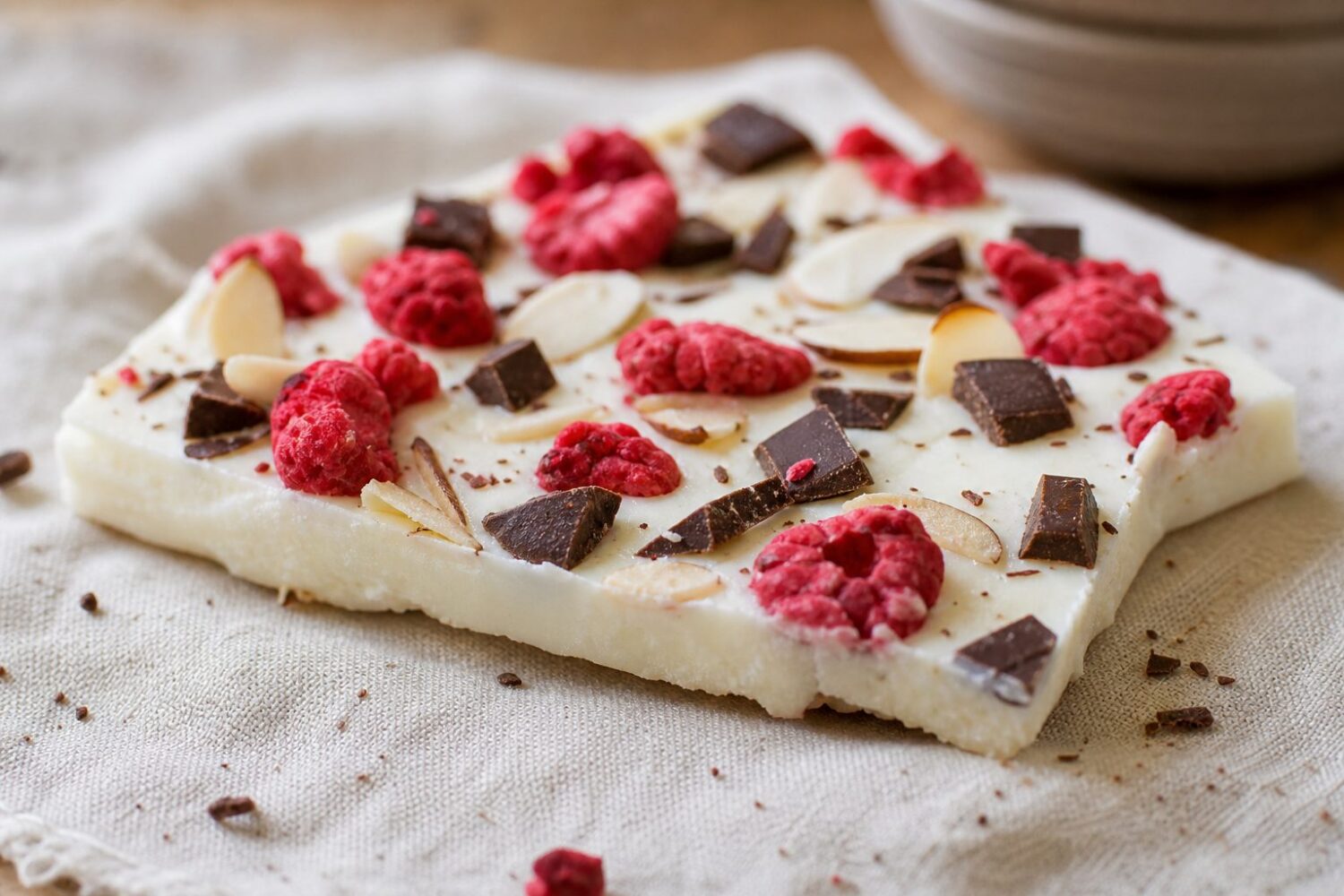
Frozen yogurt bark is the least demanding recipe in this collection by a wide margin. Four ingredients, no cooking, no moulds, no equipment beyond a tray and a spatula. It is also the one most often made badly, because the shortcuts that seem harmless are the ones that turn it into a sheet of flavoured ice.
Done properly, each piece carries 8 grams of protein and 6 grams of sugar, sets in an hour, and snaps like chocolate bark rather than shattering like a frozen puddle.
The Yogurt Decides Everything
Thick, strained Greek yogurt at 5 percent fat is the only version of this that works reliably. That is not a preference, it is arithmetic: regular yogurt carries substantially more whey, whey is water, and water becomes ice crystals large enough to feel on the tongue.
If only regular yogurt is available, it can be strained at home. A sieve lined with a coffee filter or muslin over a bowl, in the fridge for four hours, drains off enough liquid to bring it close. Two cups of regular yogurt reduces to about one and a quarter cups of usable thick yogurt.
Skyr works and sets even firmer, though it is markedly more tart and wants an extra teaspoon of honey to balance. Coconut yogurt works for a dairy-free version but drops the protein to around 3 grams per piece unless a scoop of plant protein goes in with it.
The one that does not work is anything labelled low-fat and fruit-flavoured. Those carry added water, added sugar, and thickening gums that behave unpredictably when frozen.
Getting Protein In Without Ruining the Texture
One scoop of vanilla whey or casein into two cups of yogurt is the ratio that adds meaningful protein without turning the base chalky. Casein is the better choice here for the same reason it works in the no-bake protein desserts: it thickens as it hydrates, which suits a mixture that gets spread rather than poured.
Whisk the powder into the yogurt thoroughly and then let the bowl sit for five minutes before spreading. Protein powder continues absorbing liquid after it looks combined, and a base that rests briefly spreads more smoothly and sets more evenly. Skipping the rest is why some barks come out with a faintly grainy surface.
Two tablespoons of honey or maple syrup sweetens two cups, and vanilla extract does more work than its quantity suggests. Both go in before the powder, not after, because a stiffened base resists incorporating liquid without overworking.
Spreading, and the Thickness That Matters
Line a rimmed baking tray with parchment, not foil, and not directly on the metal. Frozen yogurt bonds to bare metal with genuine enthusiasm.
Spread the base to a quarter inch thick. This measurement is the difference between bark that snaps and bark that either bends or shatters. Thinner than that and the pieces are brittle and melt in the hand within seconds; thicker and they are too hard to bite cleanly and take twice as long to set.
An offset spatula gives the flattest result, though the back of a spoon is adequate. Do not chase perfect edges. The irregular perimeter is what makes the finished pieces look like bark instead of a tray bake cut into squares.
Toppings That Survive the Freezer
This is where most barks go wrong, and the rule is simple: anything crisp will go soft, and anything with high water content will freeze into a stone.
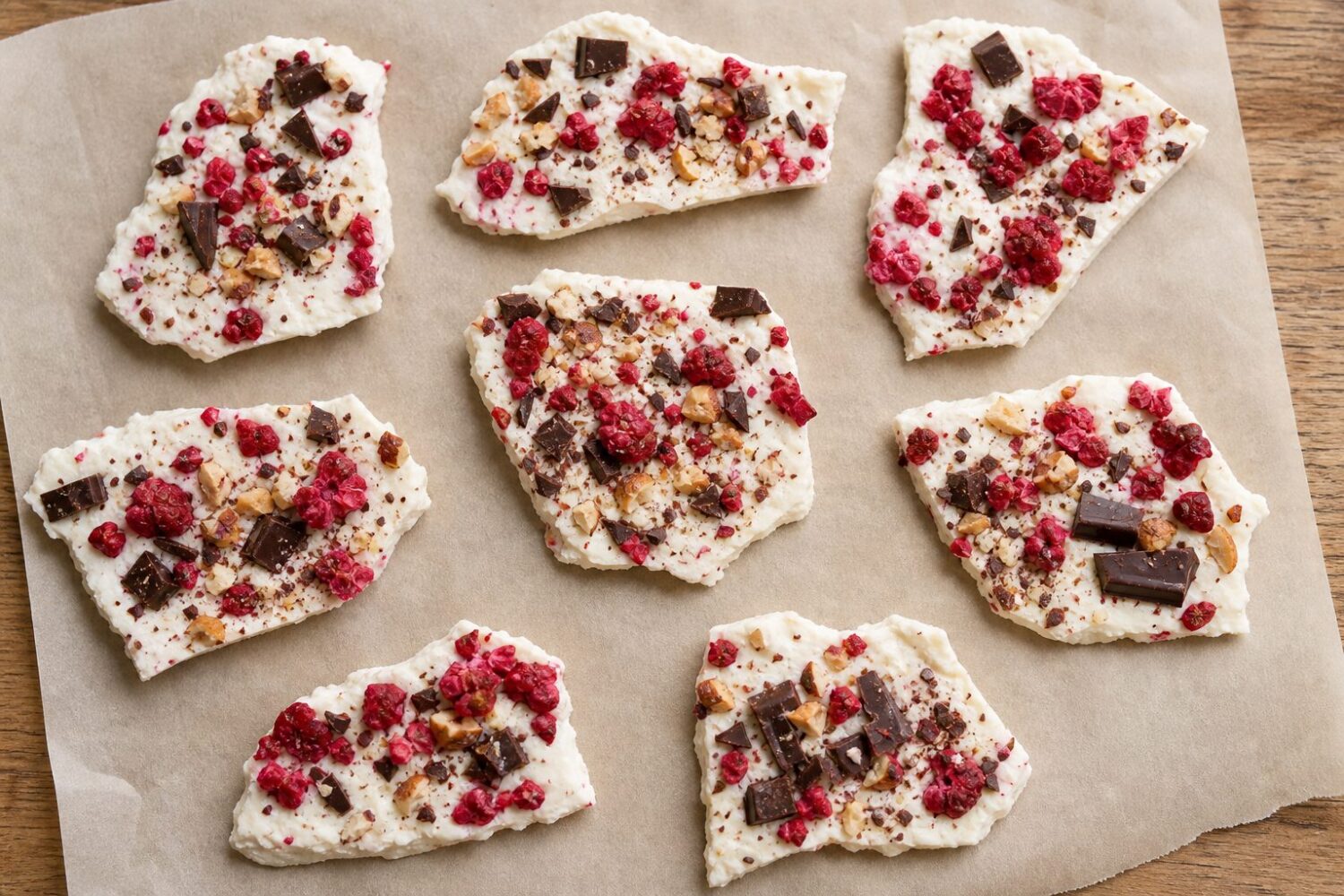
What works well is freeze-dried fruit, which stays crisp because it has no water to lose and intensifies in flavour as it sits against the yogurt. Raspberries and strawberries are the obvious choices; freeze-dried mango is the underrated one. Chopped dark chocolate holds up perfectly. Toasted nuts and seeds keep their crunch, untoasted ones do not.
What works badly is fresh berries, which freeze into hard beads that are unpleasant to bite and leak colour into the base as they thaw. Granola goes soft within a day. Anything containing caramel turns to glass.
Press the toppings in gently rather than scattering them on top. Anything sitting proud of the surface breaks off when the bark is snapped, which is how a tray of decorated bark becomes a tray of plain bark with debris at the bottom.
Freezing and Breaking It Up
An hour at a normal freezer setting is enough for a quarter-inch layer, and there is no benefit to longer beyond convenience. Once frozen, lift the whole sheet off the tray by the parchment and break it by hand into irregular pieces.
Breaking beats cutting. A knife cracks the sheet along unpredictable lines and pushes toppings off the surface; hands produce cleaner breaks and better-looking pieces.
Work quickly, because the surface begins to soften within a minute or two of leaving the freezer and a softened bark tears rather than snaps. If it starts to give, five minutes back in the freezer resets it.
Store the pieces in a sealed container with parchment between the layers. Without the parchment they fuse back into a single slab overnight, which is a solvable problem but an annoying one.
Serving It Before It Melts
Frozen yogurt bark has a genuinely short window at room temperature, around three to four minutes before the edges start to slump. That makes it excellent straight from the freezer and poor as something set out on a table for guests to graze at.
For a party, keep the container in the freezer and bring out a few pieces at a time. For a lunchbox it does not travel, no matter what the internet claims about insulated bags.
Where it genuinely excels is as an after-dinner thing eaten standing at the freezer door, which is both its natural habitat and the reason a tray disappears in two days.
Variations
A cocoa version replaces the vanilla protein with chocolate and adds a tablespoon of cocoa powder, which needs an extra teaspoon of honey against the bitterness.
Swirling two tablespoons of peanut butter through the spread base, dragged once with a skewer, gives a marbled bark with an extra gram of protein per piece. Warm the peanut butter slightly first so it ribbons instead of clumping.
A lemon version, with zest and a tablespoon of juice, is the most refreshing of the lot but needs the honey increased to three tablespoons because the acid reads as sharper once frozen.
Frequently Asked Questions
Why did my frozen yogurt bark turn out icy?
The yogurt was too thin. Regular unstrained yogurt holds far more whey than Greek yogurt, and that water freezes into crystals big enough to feel. Use thick 5 percent Greek yogurt, or strain regular yogurt through a coffee filter in the fridge for four hours first. Adding milk to make the base easier to spread will produce the same icy result, so resist it.
Can fresh berries go on top?
They can, but they freeze into hard beads that are unpleasant to bite and bleed colour into the yogurt as the piece thaws. Freeze-dried berries are the better choice: they stay crisp, taste more intensely of the fruit, and do not add any water to the surface. If fresh fruit is the only option, chop it small and accept a softer result.
How thick should the layer be?
A quarter of an inch. Thinner pieces are brittle and melt in your fingers almost immediately; thicker ones are hard to bite through and take considerably longer to freeze. A rimmed baking tray spread with two cups of base lands close to a quarter inch naturally, which is a convenient accident.
Does the protein powder have to be flavoured?
No, but unflavoured powder makes the bark taste noticeably plainer, since there is nothing else in the base carrying flavour except vanilla and the sweetener. With unflavoured powder, add an extra half teaspoon of vanilla extract and a pinch of salt. Casein rather than whey gives a creamier set either way.
The corner pieces, thicker where the base pooled against the rim of the tray, are the ones worth reaching past the others for.
Recipe Card
Nutrition values are good-faith estimates and vary with the exact brands and quantities you use.
Ingredients
- 2 cups thick full-fat (5%) Greek yogurt
- 1 scoop (about 30g) vanilla whey or casein protein powder
- 2 tbsp honey or maple syrup
- 1 tsp vanilla extract
- 1/3 cup freeze-dried raspberries or strawberries
- 2 tbsp chopped dark chocolate
- 2 tbsp toasted nuts or seeds
Instructions
- Line a rimmed baking tray with parchment. Not foil, and not the bare metal.
- Stir the honey and vanilla into the Greek yogurt first, then whisk in the protein powder until smooth.
- Let the bowl stand 5 minutes. The powder keeps absorbing liquid after it looks combined, and a rested base spreads and sets more evenly.
- Spread the base on the parchment to an even 1/4 inch thick. Leave the perimeter irregular.
- Scatter over the freeze-dried fruit, chocolate and nuts, pressing each gently into the surface so nothing sits proud of it.
- Freeze 1 hour.
- Lift the sheet off the tray by the parchment and break it into irregular pieces by hand. Work quickly, before the surface softens.
- Store in a sealed container with parchment between the layers, or the pieces fuse back into a slab overnight.