
World’s Healthiest Snickerdoodles — a Gluten-Free Recipe with the Classic Crackle
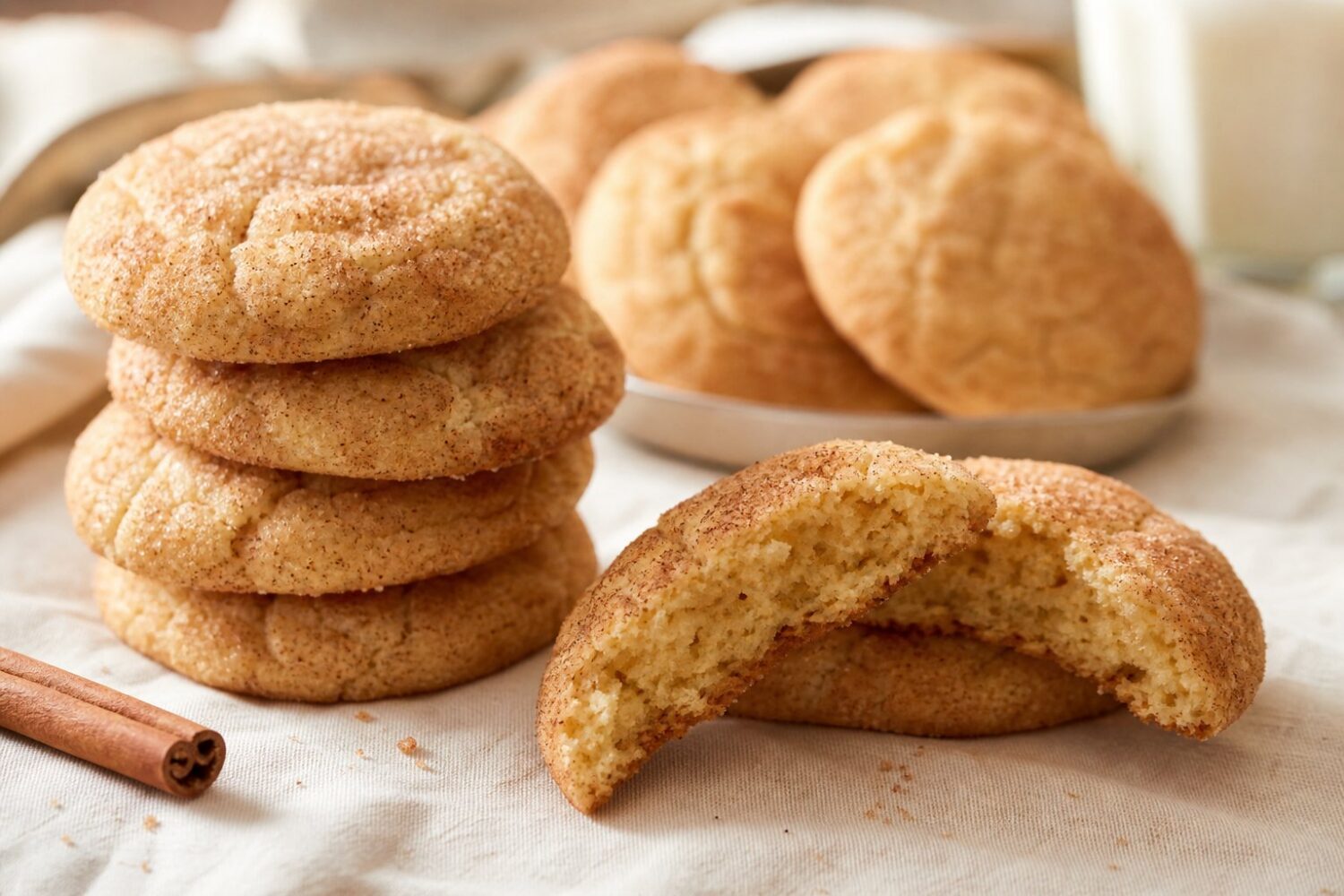
A snickerdoodle only needs three things to earn its name: a soft center, a crackled cinnamon-sugar shell, and a little tang from cream of tartar.
Everything else is negotiable, which is good news if you’re trying to build a version that skips the flour and cuts the sugar without losing what makes the cookie worth eating in the first place.
This batch swaps in an almond flour and oat flour blend, uses vegan butter, and rolls the dough in a cinnamon and monk fruit coating instead of the usual sugar mix.
The dough comes together in one bowl in about fifteen minutes, and the cookies bake in ten. Eighteen come out of a single batch, each one landing around 90 calories with 2 grams of protein and 3 grams of sugar — numbers that make it easier to eat more than one without a second thought.
Ingredients You’ll Need
Almond flour does most of the structural work here, giving the cookie a tender, slightly dense crumb that holds together without any wheat flour. Oat flour rounds it out, adding a bit of chew and helping the dough hold its shape in the oven instead of spreading thin.
Together they behave close enough to an all-purpose blend that no one reaching for a cookie would guess it’s gluten-free.
Vegan butter creams just like the dairy version, so the method stays familiar: beat it with the sweetener until it lightens in color, then work in the egg before folding in the dry ingredients. Cream of tartar is non-negotiable if you want that faint tang snickerdoodles are known for, since baking soda alone won’t get you there.
Monk fruit sweetener replaces both the granulated sugar in the dough and the coating sugar, measuring cup-for-cup like the real thing but without the same effect on blood sugar.
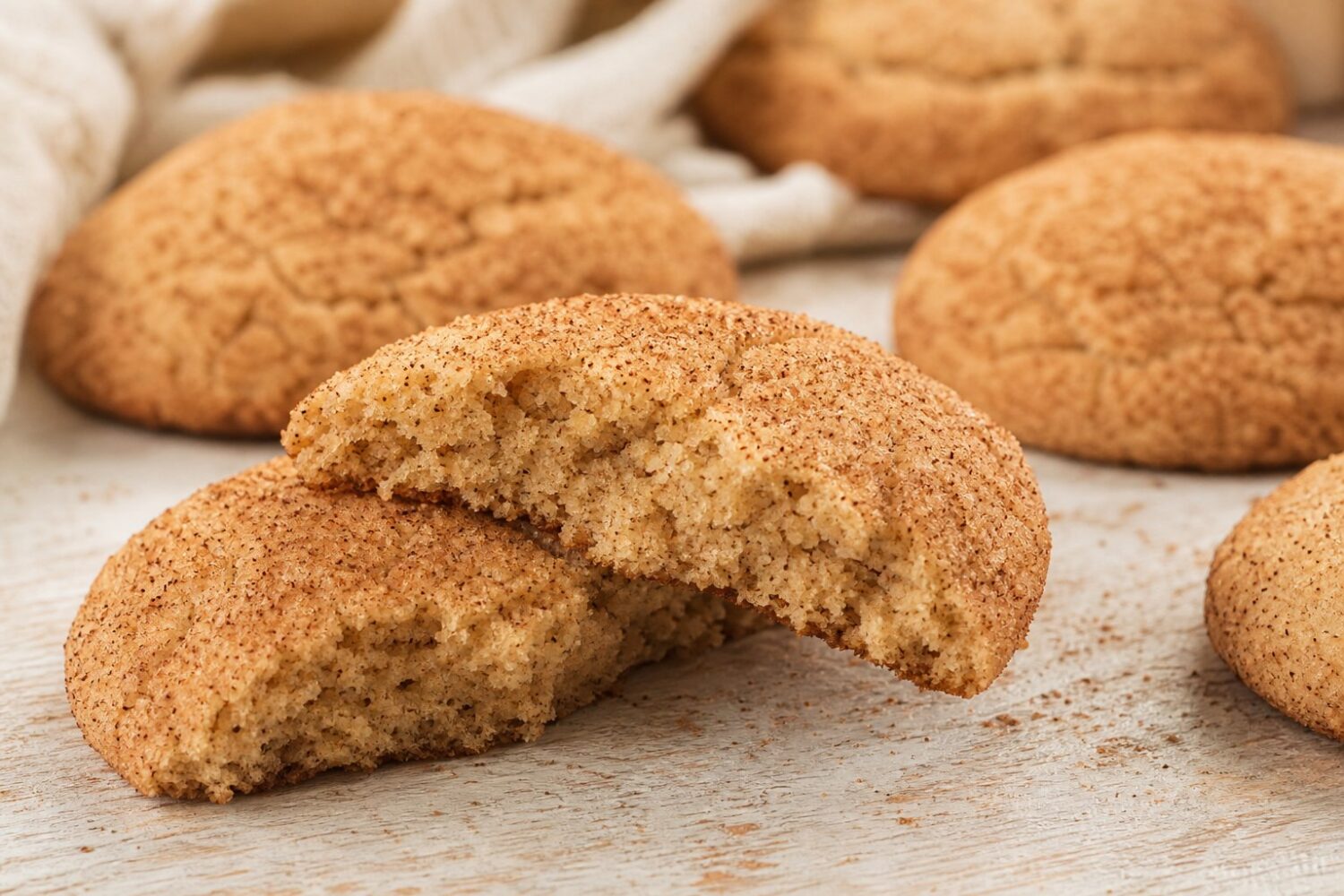
The final step, rolling each ball of dough in a cinnamon and monk fruit mixture before baking, is what gives the cookie its signature crackled top and that first hit of warm spice.
One small habit makes the coating step easier: work in batches of three or four dough balls at a time, dropping them into the cinnamon mixture and rolling with a spoon rather than fingers still sticky from the dough.
A light, even coat matters more than a thick one, since too much sweetener in the coating will scorch slightly in a 350°F oven before the center of the cookie finishes baking.
Why Gluten-Free and Lower-Sugar Doesn’t Mean Bland
Cutting sugar in baking usually means cutting flavor too, since sugar does more than sweeten. It also helps cookies brown, spread, and hold moisture.
Monk fruit sweetener sidesteps some of that trade-off because it measures like sugar and browns reasonably well in a hot oven, so the visual cues of a good cookie (the golden edges, the slightly domed center) still show up.
The cinnamon coating helps carry flavor too, since a generous layer of spice reads as “more” even when the sugar content underneath is modest.

The gluten-free side of the equation comes down to almond flour’s higher fat content, which keeps the cookies from drying out the way some gluten-free baked goods do. Oat flour adds just enough elasticity to prevent the dough from crumbling apart when rolled into balls.
The result bakes flatter and a touch denser than a wheat-flour snickerdoodle, but the texture stays soft through the center rather than turning gritty or sandy, which is the usual failure point with almond-flour cookies.
A short rest of ten minutes after mixing, before the dough gets rolled into balls, also firms things up enough to make shaping easier without changing the final texture.
Storing the Cookies
Once the cookies have cooled completely, keep them in an airtight container at room temperature for up to four days. Almond flour holds moisture well, so they stay soft rather than drying out the way some gluten-free cookies do after a day or two.
For longer storage, the baked cookies freeze well for up to two months; separate layers with parchment paper so they don’t stick together, and let them sit at room temperature for about twenty minutes before serving. The raw dough balls, coated and ready to bake, also freeze.
Bake them straight from frozen and add one to two extra minutes to the bake time.
Frequently Asked Questions
Can regular butter be used instead of vegan butter?
Yes, softened regular butter works in the same quantity and will produce a similar texture. The switch to vegan butter here is about keeping the recipe dairy-free rather than about how the dough behaves, so either option creams and bakes the same way.
Is monk fruit sweetener the same as stevia?
No. Both are non-caloric sweeteners, but monk fruit tends to have a cleaner aftertaste and measures cup-for-cup like sugar, which makes it easier to substitute directly in a recipe written for granulated sugar. Stevia is usually far more concentrated and would need a much smaller amount.
Why did my cookies spread too much or too little?
Spread is mostly about dough temperature. If the vegan butter was too soft when mixed, chilling the rolled dough balls for ten minutes before baking will tighten them up. If the cookies came out too flat, the oven may be running cooler than 350°F — an oven thermometer will confirm the actual temperature.
Can the oat flour be swapped for something else?
A 1:1 gluten-free oat flour substitute, such as a certified gluten-free all-purpose blend, can generally replace the oat flour without major changes to the result. Straight oat flour ground from rolled oats at home also works, provided it’s sifted first to remove larger flakes.
Recipe Card
Nutrition values are good-faith estimates and vary with the exact brands and quantities you use.
Ingredients
- 1.5 cups almond flour
- 1/2 cup oat flour
- 1/2 cup vegan butter, softened
- 1/2 cup granulated monk fruit sweetener
- 1 egg
- 1/2 tsp cream of tartar
- 1/2 tsp baking soda
- 2 tbsp granulated monk fruit sweetener (for coating)
- 1 tbsp cinnamon (for coating)
Instructions
- Preheat the oven to 350°F (175°C) and line a baking sheet with parchment paper.
- Cream the vegan butter and monk fruit sweetener together until light and fluffy.
- Beat in the egg, then mix in the almond flour, oat flour, cream of tartar, and baking soda until a soft dough forms.
- Mix the coating sweetener and cinnamon together in a small bowl.
- Roll the dough into 18 balls, then roll each ball in the cinnamon-sweetener coating.
- Place on the baking sheet and bake for 10 minutes, until the edges are just set.
- Cool on the tray for 5 minutes before moving to a wire rack.