
No-Bake Peanut Butter Protein Bites — the Healthy High-Protein Recipe
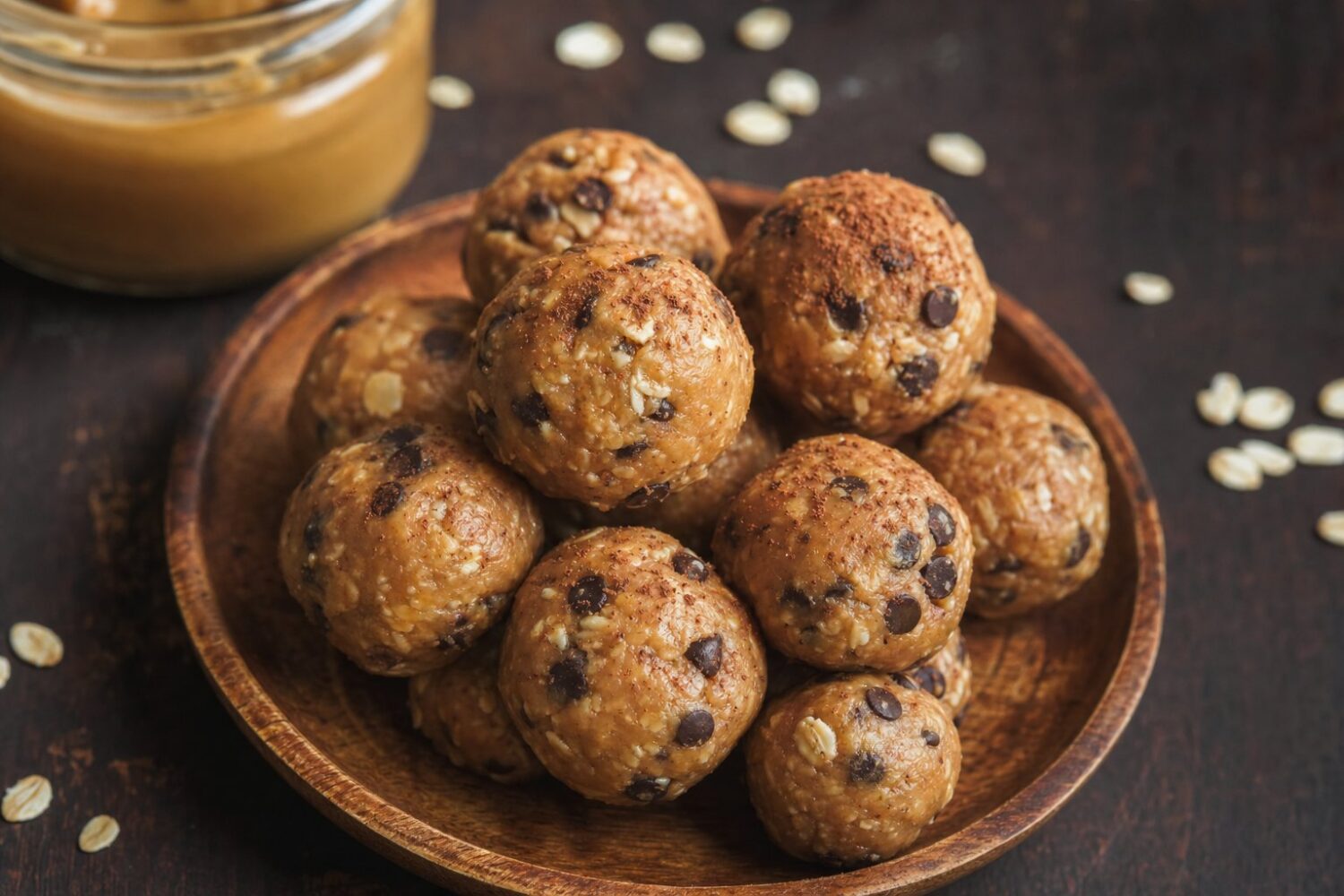
The first batch of these peanut butter protein bites got made on a Tuesday night with about eleven minutes of patience left in the tank, a half-used jar of peanut butter, and a container of protein powder that had been sitting in the back of the cabinet since a New Year’s resolution three months earlier.
No oven, no timer, no dishes beyond one mixing bowl — these are no bake protein bites in the most literal sense. Sixteen came out of that first batch, and by Thursday there were four left.
That’s the whole appeal, honestly. These are healthy peanut butter protein bites you roll by hand and stash in the fridge, and they taste like a slightly nutty, chocolate-flecked cookie dough that never had to go near an oven.
If you’ve ever stood in a kitchen at 9 p.m. wanting a protein snack that isn’t a bar wrapped in crinkly foil, this is the fix, and it takes less time than driving to a store to buy one.
What follows is the long version: the reasoning behind each ingredient, the actual protein math, and enough storage detail that a batch made on a Sunday can reasonably last two people through the following weekend.
Why This No-Bake, Healthy Protein Bite Recipe Works
Most protein snacks on a grocery shelf lean hard on one of two things: a processed bar held together with sugar alcohols and a wall of stabilizers, or a shake that tastes faintly of chalk with a vitamin label stapled on. This recipe skips both.
It’s a no-bake protein bite built from five pantry staples, and the texture depends entirely on ratio, not on baking chemistry. Get the oats-to-peanut-butter-to-binder proportion right and the dough holds its shape in your palm without cracking, crumbling, or turning greasy on your fingers.
No-bake also means no oven preheat, no bake time to babysit, and no risk of over-drying a batch on a hot afternoon when the last thing anyone wants is an oven running for twenty minutes. That matters more than it sounds like it should.
A recipe you’ll actually make twice needs to survive a weeknight, not just a slow Saturday with nothing else going on. Ten minutes of active mixing, a short chill, and it’s done.
The healthy label here isn’t marketing pasted onto an otherwise ordinary cookie dough. Swap white sugar for a measured amount of honey, swap all-purpose flour for rolled oats, and the sugar content of the finished bite drops to a fraction of what a comparable snack carries. Two bites land around 180 calories with 4 grams of sugar.
For context, a standard fun-size candy bar can carry six times that sugar count in a noticeably smaller portion, which is the kind of comparison that actually changes what people reach for at 3 p.m.
There’s also a structural reason this recipe holds up better than a lot of “healthy” dessert swaps: it isn’t trying to fool anyone into thinking it’s cake.
It reads as exactly what it is, a dense, satisfying, slightly sweet protein snack, and because it doesn’t overpromise, it doesn’t disappoint the way a “guilt-free brownie” sometimes does when the texture is off.
There’s a batch-size logic worth mentioning too. Sixteen small bites from one bowl means the portion control happens automatically, before anyone’s decided how hungry they actually are.
Compare that to a pan of brownies, where the first cut rarely stays the size you meant it to be. A protein bite is already the serving size. Nobody has to eyeball a slice.
Ingredients You’ll Need
Natural peanut butter, not the shelf-stable kind loaded with hydrogenated oil, is doing double duty in this bowl: fat for texture, plus a real chunk of the protein count. The oil-separated jars need a stir before measuring, which is mildly annoying and worth it.
The flavor is rounder and less sweet on its own, which leaves more room for the honey and chocolate to actually register instead of getting buried under added sugar that’s already baked into a processed peanut butter spread.
Old-fashioned rolled oats hold their shape better than quick oats, which turn slightly mushy once they’ve sat in a moist dough for more than a few hours. Rolled oats keep a little bite, almost like a granola bar crossed with raw cookie dough. Steel-cut oats, for what it’s worth, don’t work here at all.
They never fully soften against the peanut butter and honey, and the bites end up gritty in a way that’s hard to disguise no matter how long they chill.
The protein powder is where a lot of home cooks overthink things. A single scoop, vanilla or chocolate, pushes the protein count of each serving well past what oats and peanut butter alone provide. Whey-based powders blend smoother into a dense dough like this one.
A plant-based blend works fine too, but it tends to drink up slightly more liquid, so keep an extra spoonful of honey on standby in case the dough looks dry after the first mix.
Honey or maple syrup is the binder, and it’s also the only significant source of sugar in the whole bowl. The two aren’t interchangeable in a purely neutral way: honey sets up a touch firmer once chilled, while maple syrup keeps the dough slightly softer and adds a faint caramel note that pairs well with the chocolate chips.
Either is a fair choice; it comes down to what’s already open in the pantry.
Mini chocolate chips, not the regular-size kind, distribute more evenly through a ball this small. You want chocolate in every bite, not one chip hogging the center of bite number three while the rest go bare.
A dark chocolate chip, something in the 60 to 70 percent cacao range, keeps the overall sugar count down without losing the chocolate flavor that makes these feel like a treat instead of a supplement.
A pinch of salt and a half teaspoon of vanilla extract round the whole thing out. Neither is optional in the way a garnish is optional. Salt sharpens the peanut butter flavor noticeably, and without the vanilla, the protein powder’s artificial-sweetener aftertaste (a real thing, especially with stevia-sweetened powders) tends to poke through more than it should.
Almond butter is a fair substitute for the peanut butter if there’s a nut preference in the house, though the flavor shifts noticeably milder and the color runs a shade lighter.
Sunflower seed butter works for a nut-free version entirely, with the caveat that sunflower seed butter can turn baked goods faintly green over a day or two due to a harmless reaction between its chlorophyll and baking soda.
There’s no baking soda here, so that particular quirk doesn’t apply. But the flavor is more assertive and slightly bitter compared to peanut butter, so start with a bit less honey and taste as you go.
The Protein Count, and Why It Actually Matters Here
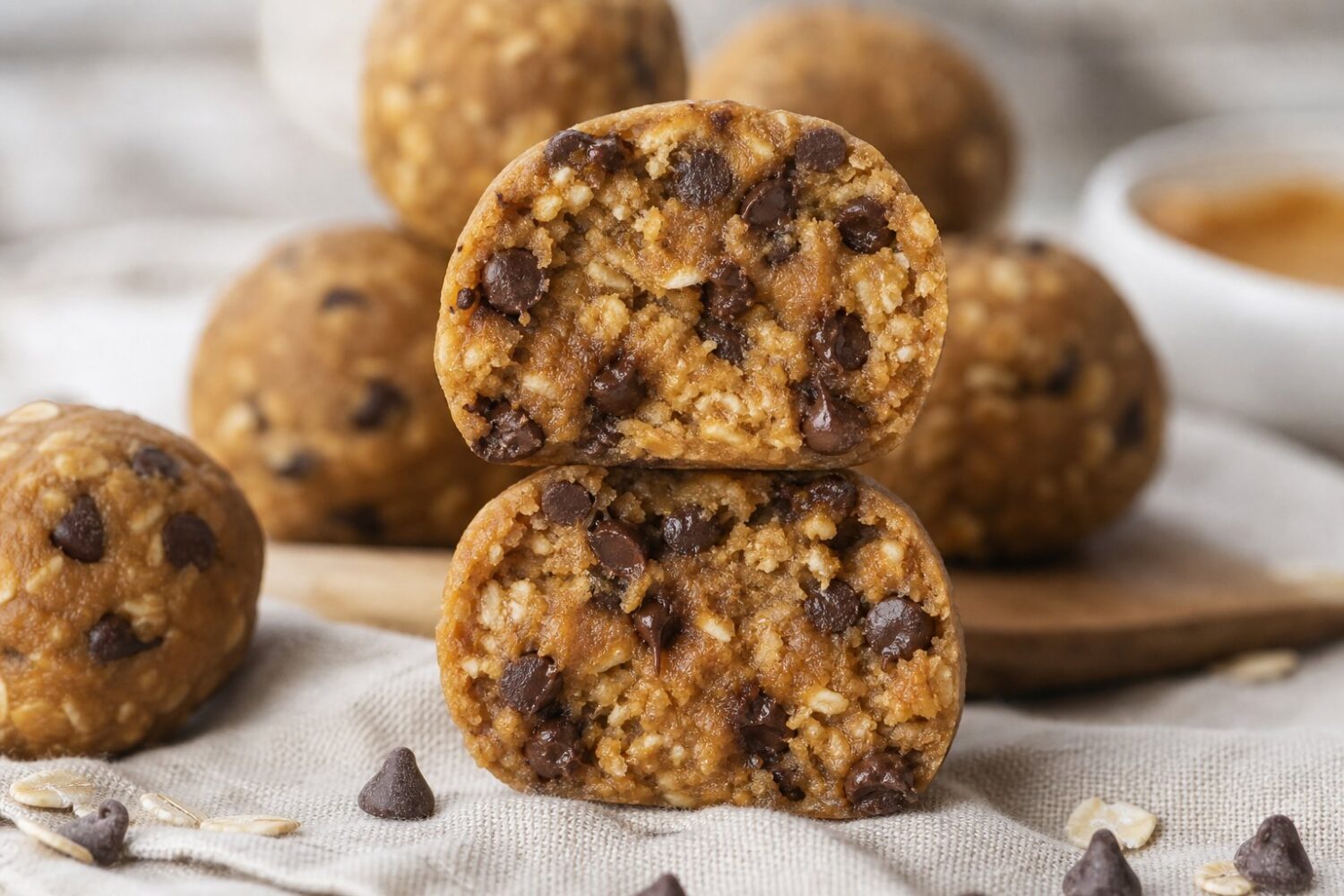
Each serving of two bites carries roughly 15 grams of protein. That’s not a bar-label exaggeration rounded up from a decimal. It’s the combined total of the protein powder scoop, a modest contribution from the peanut butter, and a smaller amount from the oats themselves, all measured against the full batch of sixteen bites split into eight servings.
What that means in practice: this isn’t a “protein-washed” snack where a marketing team bolted the word onto a recipe carrying three grams of actual protein per serving, the way some grocery-store “protein cookies” quietly do.
Fifteen grams is close to what a standard scoop of whey protein alone delivers, which means the oats and peanut butter are adding real protein on top rather than just bulking up the bite with filler carbohydrate that inflates the serving size without inflating the nutrition.
For a mid-afternoon snack meant to hold you until dinner, that’s a meaningfully different number than a granola bar sitting at 2 or 3 grams of protein and 20-plus grams of sugar.
Fifteen grams of protein is enough to blunt a hunger spike in a way that sugar alone never does; protein slows gastric emptying and keeps blood sugar from spiking and crashing the way a straight-carbohydrate snack tends to.
It’s worth noting that not all protein powders are created equal here, and the brand genuinely changes the outcome.
A whey isolate will generally read as slightly higher protein per scoop than a whey concentrate, and a pea-protein or rice-protein blend (common in vegan powders) often needs to be used in a slightly larger scoop to hit the same 15-gram mark, since plant proteins are typically a touch less protein-dense by volume.
None of that is a dealbreaker; it just means the exact protein number on your own batch might land a gram or two off from the figure quoted here, depending on what’s in your particular tub.
Healthified Swap: Candy Bar vs. Protein Bite
Classic Candy Bar
- ~250 calories
- 2g protein
- 24g sugar
- Refined chocolate + corn syrup
This Protein Bite (2 bites)
- ~180 calories
- 15g protein
- 4g sugar
- Oats + natural peanut butter + dark chocolate
-20g sugar
-70 calories
Rolling, Chilling, and Getting the Texture Right
The dough should hold together when pressed between two fingers without crumbling apart, but it shouldn’t be so wet that it sticks to your palm in a thick layer. If it’s too dry after mixing in the oats and protein powder, add honey a half-teaspoon at a time.
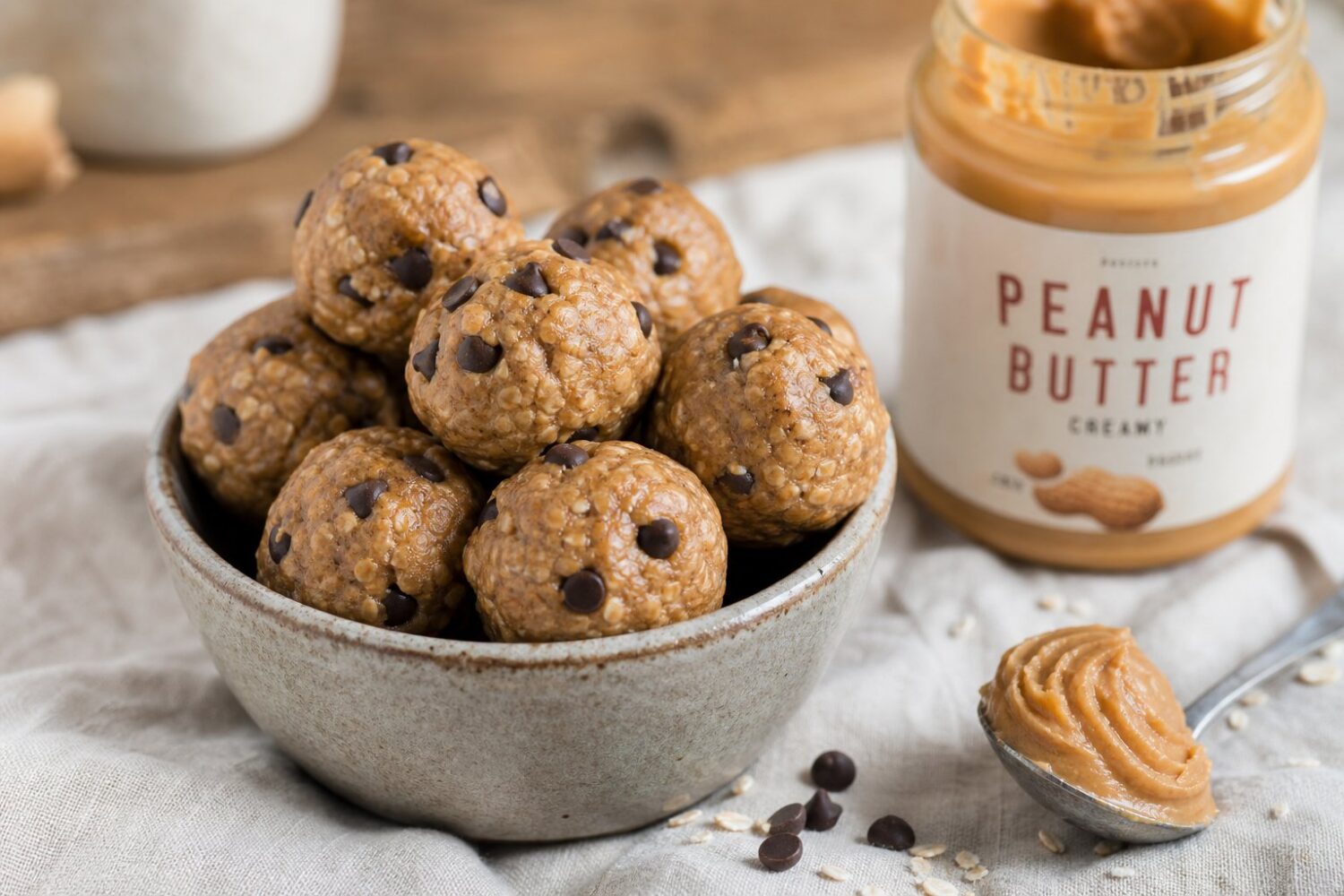
Too wet, and a tablespoon of extra oats usually fixes it without throwing off the flavor balance.
Rolling by hand works better than any scoop or melon-baller here, mostly because hand pressure compacts the dough slightly as you go, which is part of what keeps a finished bite from falling apart in a lunch bag three hours later.
Sixteen bites from one batch works out to roughly a rounded tablespoon of dough per ball, small enough to eat in two or three bites, large enough to actually feel like a snack rather than a garnish.
Fifteen minutes in the fridge is the minimum, not the ideal. Thirty minutes firms the peanut butter and honey enough that the bites hold their shape at room temperature for a solid hour once you take them out, which matters if they’re going into a lunchbox or a gym bag rather than being eaten immediately off the tray.
A parchment-lined tray or plate makes the chilling step faster and the cleanup nearly nonexistent. Skip the parchment and the bites tend to pick up a thin film of whatever’s underneath, plastic wrap included, which peels off fine but is an extra step nobody needs.
Sixteen bites fit comfortably on a standard quarter-sheet pan with room to spare between each one, so they chill evenly instead of fusing together at the edges.
Storage and Make-Ahead Tips
These keep in an airtight container in the fridge for a full week, which is longer than most homemade snacks manage before texture starts to suffer. The chilling step isn’t optional theater.
At room temperature the peanut butter softens enough that the bites lose their shape and start sticking together in a clump, which is fine for eating at home but a mess in a bag.
For longer storage, freeze them. Lay the rolled bites on a parchment-lined tray, freeze until solid, about two hours, then transfer everything to a freezer bag or a lidded container.
They’ll hold for up to three months and thaw at room temperature in roughly ten minutes, or you can eat one straight from the freezer if you don’t mind a firmer bite. Some people actually prefer it that way, closer to a frozen cookie dough truffle than a soft, chilled snack.
One small trick worth knowing: if the dough feels too sticky to roll cleanly, wet your hands with a little water before shaping each ball. It keeps the dough from gluing itself to your palms without changing the final texture at all. It’s a five-second habit that saves a genuinely frustrating five minutes of scraping dough off your fingers.
A batch doubles cleanly if you’re feeding more than two people or meal-prepping for the week; just use a larger bowl and expect the mixing to take a minute or two longer by hand.
These also travel better than most homemade snacks. Because they’re already firm and self-contained, a handful wrapped in parchment or dropped into a small container survives a gym bag, a school lunch, or a car console on a road trip without turning into a smear, which is more than can be said for most no-bake desserts.
A short ice pack alongside them keeps the texture firm through a warm afternoon, though at room temperature for an hour or two they hold their shape just fine on their own.
Why These Peanut Butter Protein Bites Work
The short version: these no bake protein bites hit three things at once that most snacks don’t. There’s no oven, no waiting around, just stir and chill. They lean on real peanut butter rather than a flavored coating, so the peanut flavor stays in front.
And the healthy peanut butter protein bites label actually holds up under a nutrition label, not just marketing copy.
Frequently Asked Questions
Can I make these peanut butter protein bites without protein powder?
You can, though the protein count drops significantly, down to roughly 6 to 7 grams per serving instead of 15. If you skip the protein powder, add an extra 2 tablespoons of oats to keep the dough from turning too wet, since the powder normally absorbs some of the honey and peanut butter’s moisture.
What makes these no bake protein bites different from a protein bar?
A store-bought bar is manufactured and pressed with stabilizers to survive months on a shelf. These no bake protein bites are made fresh, rolled by hand, and meant to be eaten within a week or frozen, the tradeoff being shorter shelf life for a shorter, more recognizable ingredient list.
Are these healthy peanut butter protein bites gluten-free?
They can be, as long as you buy oats labeled certified gluten-free. Regular rolled oats are often processed in facilities that also handle wheat, so cross-contamination is the concern, not the oat itself.
Why did my peanut butter protein bites turn out dry and crumbly?
Almost always it’s the protein powder brand. Some absorb liquid much more aggressively than others. If your dough crumbles instead of holding together when pressed, add honey a teaspoon at a time until it packs into a ball without cracking.
Can kids eat these protein bites?
Most kids like them fine, though the protein content is really sized for an adult snack portion. For younger kids, a single bite rather than the full two-bite serving is usually plenty, and it’s worth checking the protein powder label since some are formulated with more caffeine or additives than a child needs.
Can I use crunchy peanut butter instead of creamy?
Yes, and it adds a pleasant bit of texture from the peanut pieces. The dough is slightly harder to roll into a smooth ball with crunchy peanut butter, so expect a more rustic, less uniform shape, which honestly suits a homemade snack just fine.
One last note on the chocolate: swapping the mini dark chocolate chips for cacao nibs cuts the sugar even further, though the texture turns a bit more crunchy than melt-in-your-mouth. Either way, keep a few bites in the freezer. A cold protein bite eaten straight off a hot afternoon walk is an underrated way to end one.
Recipe Card
Nutrition values are good-faith estimates and vary with the exact brands and quantities you use.
Ingredients
- 2 cups old-fashioned rolled oats
- 1 cup natural peanut butter (creamy, no added sugar)
- 1/3 cup honey or maple syrup
- 1 scoop (about 30g) vanilla or chocolate protein powder
- 1/3 cup mini dark chocolate chips
- 1/2 tsp vanilla extract
- Pinch of salt
Instructions
- In a large bowl, stir together the rolled oats, protein powder, and salt.
- Add the peanut butter, honey, and vanilla extract. Mix until a thick, uniform dough forms — use your hands toward the end if a spoon isn't cutting it.
- Fold in the mini chocolate chips.
- Scoop into 16 equal portions and roll each into a ball between your palms.
- Place the bites on a parchment-lined tray and chill in the refrigerator for at least 15 minutes before serving.
- Store in an airtight container in the fridge for up to a week, or freeze for up to 3 months.