
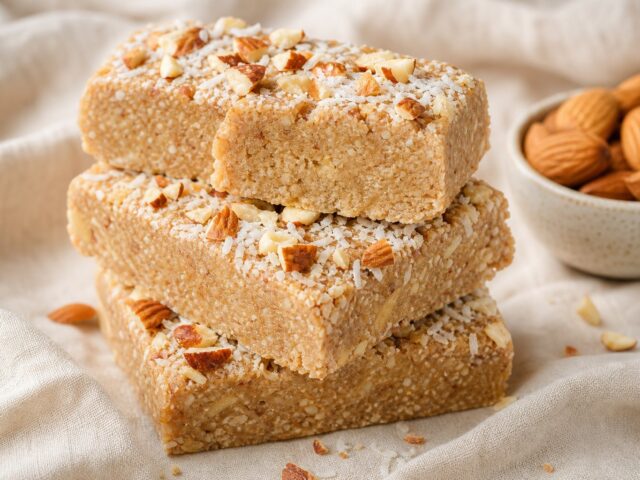
Protein & Healthified Desserts
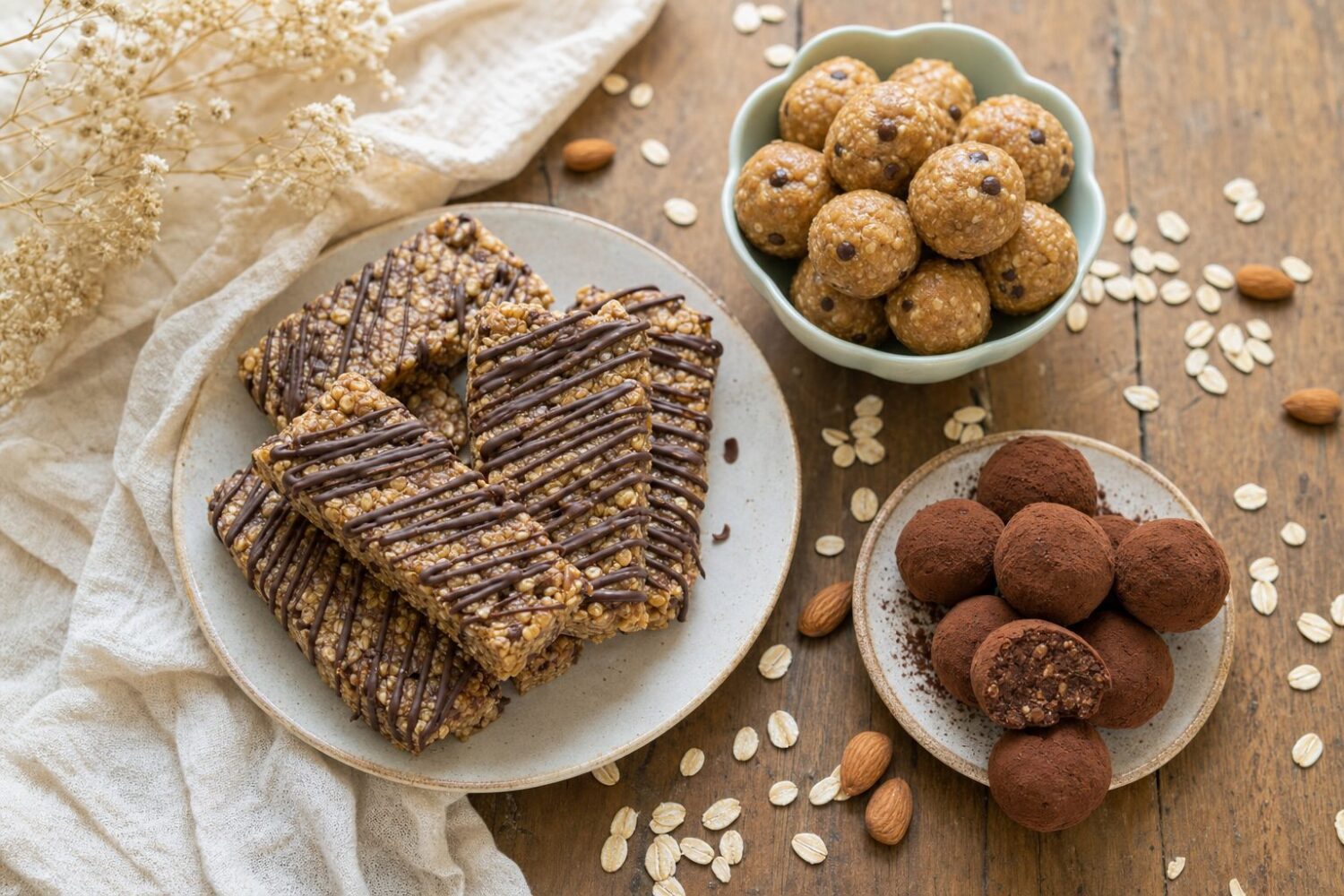
Every recipe in this collection answers the same craving: something that tastes like dessert and pulls its weight nutritionally. Protein desserts here means bars, bites, truffles, cookies, and cakes where the protein is structural — built into the base, not dusted on top as an afterthought.
None of it tastes like the supplement aisle. That is the entire test. A protein brownie that needs an apology is a failed brownie, no matter what its macros claim.
Most of these recipes came out of the same 3pm problem: the vending machine is close, willpower is finite, and the fridge either holds something better or it does not. This page is the fridge holding something better.
How These Protein Desserts Are Built
The backbone is almost always the same short list: rolled oats, natural nut butter, a scoop of protein powder, and a liquid sweetener doing double duty as the binder. The ratios shift from recipe to recipe; the logic never does.
Protein powder gets treated as an ingredient with real consequences. Every scoop drinks moisture out of a batter, so every recipe that uses it hands that moisture back — mashed banana, Greek yogurt, applesauce, or an extra splash of almond milk.
Powder type matters more than powder brand. Whey sets soft and creamy, casein sets firm enough to slice, and plant blends drink roughly a third more liquid than either. Each recipe names the type it was tested with and flags the adjustment when a swap changes the outcome.
No-Bake First, Oven Second
Most of this collection never sees the oven, and that is deliberate. Heat is protein powder’s enemy: baked whey turns rubbery, baked plant protein turns sandy. Pressed cold and chilled, both behave exactly as intended.
No-bake also means one bowl, no timer, and a forgiving process. Too dry, add liquid; too wet, add oats. There is no point of no return, which makes these the friendliest recipes in the house for small helpers.
The fridge does the finishing work. Twenty minutes of chilling firms most bars enough to slice cleanly, and an overnight rest makes them sturdy enough to survive a lunchbox until noon.
Where to Start
The no-bake peanut butter protein bites are the flagship: ten minutes, one bowl, sixteen bites, and the recipe that got picked up by press across the country.
If the craving reads more like actual cake, the birthday cake protein bars fold rainbow sprinkles into a dense funfetti base, and the protein tiramisu cake layers real espresso into something that passes for a dinner-party dessert.
The baked corner of the collection — chocolate turtle cookies, coconut cranberry breakfast cookies — behaves more like conventional baking, with protein worked in where the texture can carry it.
Reading the Macros
Every recipe card lists calories, protein, and sugar calculated from the exact brands used in testing, rounded plainly. Treat them as close estimates: your peanut butter and mine disagree by a few calories per spoonful, and both of them are right.
Portions are honest. A serving is what a normal person eats standing at the counter, not a decorative sliver invented to flatter the numbers. When a recipe stretches further as party food, the notes say so.
If a substitution here is not behaving in your kitchen, the contact address on the About page reaches a real inbox — ingredient brands vary more than recipes admit, and most problems trace back to one.
Frequently Asked Questions
Which protein powder works best in no-bake desserts?
Casein sets firmest and slices cleanest, which suits bars and squares. Whey is softer and creamier, better in truffles and anything spooned rather than cut. Plant blends work but drink roughly a third more liquid than either, so a recipe written for whey needs an extra splash of milk when made with pea or rice protein. Every recipe here names the type it was built around and flags the adjustment where a swap changes the outcome.
Why do most of these recipes skip the oven?
Heat is unkind to protein powder. Baked whey turns rubbery and baked plant protein turns sandy, and neither problem can be corrected afterwards. Pressed cold and chilled, both set exactly as intended. No-bake also means one bowl, no timer and a forgiving process where too dry is fixed with liquid and too wet is fixed with oats, so there is no point of no return.
Can these protein desserts be made without protein powder at all?
Often, yes, with a lower but still respectable protein count. Greek yogurt, nut butters and oats carry a surprising amount on their own, so leaving the powder out typically drops a recipe from ten or twelve grams per serving to five or seven rather than to nothing. Where a recipe genuinely depends on the powder for structure or for its flavour, the recipe notes say so and estimate the difference.
How long do no-bake protein bars and bites keep?
About a week in an airtight container in the fridge, and most of them improve after the first day as the oats finish absorbing the nut butter. Frozen, they hold three months wrapped individually. Room temperature is the one to avoid beyond a day, because a nut-butter base softens quickly once it leaves the fridge.
Are the nutrition figures per serving reliable?
They are close estimates calculated from the specific brands and quantities each recipe lists, not laboratory measurements. Peanut butter and protein powder in particular vary enough between brands to move a figure by several calories per spoonful. Portions are counted honestly, as what a person actually eats standing at the counter rather than a decorative sliver chosen to flatter the numbers.